
Choosing the best Lumbar Traction Table requires more than comparing motors, straps, or advertised force. It requires clinical judgment. The World Health Organization reports that low back pain affected approximately 619 million people globally in 2020. That number may reach 843 million by 2050. These figures explain the demand for practical, non-invasive rehabilitation equipment.
Still, popularity is not proof. A Cochrane review found that traction provides little or no meaningful benefit for many people with low back pain. Patient selection matters. Diagnosis matters more. A suitable table should offer controlled force, gradual adjustment, secure pelvic fixation, comfortable positioning, and clear emergency release access. It should also support documented treatment protocols.
Spine researcher Stuart McGill has said, “The spine is not a hinge; it is a dynamic structure.” That idea should guide every purchase. A Lumbar Traction Table is not a universal solution. It is one tool within a broader plan involving assessment, exercise, education, and monitoring. The best model may differ between a sports clinic, a hospital, and a small physiotherapy practice.
Look closely at real use. Can the clinician adjust traction without leaving the patient? Does the frame remain stable during loading? Are replacement straps available? These details are easy to ignore. They should not be.
This guide compares leading options through evidence, usability, safety features, and long-term value. Some conclusions remain imperfect. Research is still mixed, and manufacturer claims require careful verification. That is precisely why informed evaluation matters.
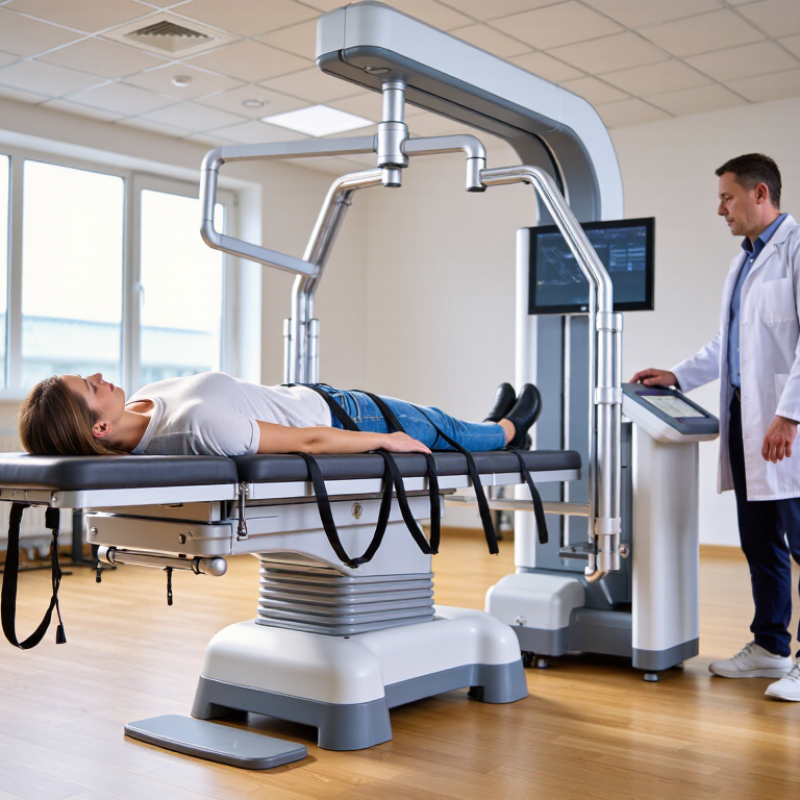
What Is the Best Lumbar Traction Table?
The best lumbar traction table is not automatically the most expensive one. It should match the patient’s condition, body size, and treatment goals. Lumbar traction gently separates spinal segments through controlled pulling force. This may reduce pressure and improve comfort for some people with lower back pain or nerve-related symptoms. Results vary.
A suitable table should allow precise force adjustment and steady movement. A split surface can reduce friction during traction. Secure pelvic and chest supports matter too. The patient should remain relaxed, not strained. Easy height adjustment also helps clinicians maintain safe working posture. Small details count.
A trained healthcare professional should screen for fractures, severe osteoporosis, infection, recent surgery, and unexplained pain before treatment. Traction is not appropriate for everyone. It should not replace diagnosis, exercise, or necessary medical care. In practice, comfort is sometimes underestimated. A table may appear advanced, yet poor positioning can make treatment ineffective or unpleasant. The best choice is therefore the table that supports careful assessment, gradual settings, clear monitoring, and documented response. When symptoms worsen, treatment should stop and the patient should be reassessed.
What Is the Best Lumbar Traction Table? The better question is how safely and precisely it applies traction. A lumbar traction table uses a pelvic harness to create a controlled pulling force along the spine. The patient usually lies face up, while the motor applies steady or intermittent tension. This may temporarily reduce pressure, ease muscle guarding, and improve movement. The effect can feel practical: less stiffness when standing, or reduced leg discomfort after treatment. However, the table does not repair every spinal problem.
Clinical evidence remains mixed. Cochrane reviews on traction for low back pain found little meaningful benefit for many people with nonspecific pain. Results may differ for selected patients with nerve-related symptoms. The World Health Organization reported that low back pain affected about 619 million people in 2020. It may reach 843 million cases by 2050, according to its 2023 report. That scale demands careful treatment choices, not mechanical promises.
A suitable table should allow accurate force adjustment, stable positioning, and emergency release. A clinician should screen for fractures, severe osteoporosis, infection, progressive weakness, and other serious conditions. Patient feedback matters. So does reassessment after each session. I would not describe traction as a cure. It is one tool within exercise, education, and clinical monitoring. The field still has unanswered questions.
| Evaluation Dimension | Common Option or Feature | How It Works | Typical Clinical Use | Potential Advantages | Important Limitations |
|---|---|---|---|---|---|
| Traction method | Mechanical traction | A motor applies a controlled pulling force through a pelvic harness while the patient lies on the table. | Used for supervised lumbar decompression or traction programs. | Force, duration, and treatment cycles can be adjusted and documented consistently. | The appropriate force and protocol vary by diagnosis, body size, symptoms, and clinician assessment. |
| Table movement | Split or sliding table | The table separates or moves in sections while traction is applied, helping create relative movement between the trunk and pelvis. | Often selected when controlled lumbar movement is desired during traction. | May reduce friction and allow smoother application of the pulling force. | More moving parts can increase maintenance requirements and may raise purchase and service costs. |
| Traction pattern | Intermittent traction | The pulling force alternates with periods of reduced force or relaxation. | Commonly used when a patient does not tolerate continuous pulling well. | Can be adjusted for comfort and may be easier to tolerate than a constant load. | Clinical response is variable, and symptom relief may be temporary. |
| Traction pattern | Static traction | A relatively steady pulling force is maintained for a selected period. | May be considered for carefully selected patients under professional supervision. | Simple treatment pattern with a consistent load. | May aggravate symptoms in some patients if the force, duration, or positioning is unsuitable. |
| Patient positioning | Supine positioning | The patient lies on the back while the pelvis is secured and the lumbar region is aligned with the treatment setup. | Useful when a stable, supported position is preferred. | Allows access to the abdomen and may be comfortable for many patients. | Some people with breathing difficulty, abdominal discomfort, or certain spinal conditions may not tolerate the position. |
| Patient positioning | Prone positioning | The patient lies face down while the pelvis and trunk are positioned for traction. | May be selected when prone positioning better matches the patient’s symptoms or treatment plan. | Can accommodate some extension-based treatment approaches. | May be unsuitable for patients with breathing problems, pregnancy-related discomfort, or difficulty lying face down. |
| Pelvic support | Adjustable pelvic harness | A padded belt transfers the traction force to the pelvis while helping stabilize the lower body. | Used in most mechanical lumbar traction setups. | Improves force transfer and allows adjustment for different body shapes. | A poorly fitted harness can cause pressure, discomfort, skin irritation, or ineffective force transmission. |
| Force control | Programmable force and treatment cycles | The control system sets the pulling force, hold time, rest time, and total treatment duration. | Useful when treatment needs to be reproduced across multiple visits. | Supports gradual progression and clearer treatment records. | Preset programs should not replace clinical judgment or symptom monitoring. |
| Patient comfort | Wide, padded table surface | Provides support for the trunk and pelvis while distributing contact pressure. | Important for longer sessions and patients with muscular tenderness. | May improve comfort and reduce pressure points during treatment. | Padding can compress over time and should be inspected for wear, cracking, or loss of support. |
| Adjustment range | Adjustable height and section angles | The table height, back section, or pelvic section can be modified to match the patient and treatment plan. | Useful in multidisciplinary clinics and for patients of different heights. | Improves access, positioning, and transfer safety. | More adjustment mechanisms require proper setup, staff training, and routine inspection. |
| Target condition | Mechanical low back pain with or without leg symptoms | Traction attempts to reduce compressive loading or alter mechanical stress around the lumbar spine. | May be considered as one component of a broader rehabilitation plan after assessment. | Some patients report short-term symptom relief or improved tolerance for movement. | Research findings are mixed, and traction is not uniformly effective for every type of low back pain. |
| Evidence and treatment planning | Adjunctive therapy rather than a stand-alone solution | Traction is commonly combined with exercise, education, manual therapy, activity modification, or other appropriate care. | Used when the clinician believes traction may support functional recovery. | Combining treatments addresses strength, mobility, posture, and daily activity limitations. | Routine use without reassessment may provide little benefit and can delay more appropriate care. |
| Safety screening | Pre-treatment medical assessment | A qualified professional reviews symptoms, medical history, neurological findings, and possible contraindications before treatment. | Required before selecting force, position, and treatment duration. | Helps identify patients who may need another treatment approach or medical referral. | Traction should not be self-prescribed for unexplained, severe, or rapidly worsening symptoms. |
| Warning signs | Progressive weakness, bowel or bladder changes, saddle numbness, fever, or major trauma | These symptoms may indicate a condition requiring urgent medical evaluation rather than routine traction. | Immediate referral or medical assessment is more appropriate than starting table treatment. | Early recognition can reduce the risk of delaying necessary care. | Traction is not a substitute for emergency evaluation or diagnosis of serious spinal conditions. |
| Best overall selection criteria | Safe adjustability, suitable positioning, reliable force control, strong padding, and professional support | The best table is the one that matches the patient population, treatment goals, clinic space, and clinician’s protocol. | Used when choosing equipment for a rehabilitation, physiotherapy, or medical practice. | Balances patient safety, treatment consistency, comfort, durability, and workflow. | A feature-rich table is not automatically better if staff cannot use it correctly or the clinical indication is unclear. |
A high-quality lumbar traction table should make force predictable, visible, and adjustable. Look for a calibrated motor, gradual force ramp, and an easy-to-reach emergency stop. These controls help clinicians modify treatment when a patient reports sharp pain, numbness, or anxiety. A stable frame matters too. The table should remain quiet and level while the pelvis and upper body stay securely supported. Adjustable sections can improve comfort, especially when a patient has limited hip mobility. Cleanable upholstery and clear weight-limit information are practical safety details, not decorative extras.
Clinical evidence also requires caution. The World Health Organization’s 2023 guideline on chronic primary low back pain advises against routine traction, reflecting limited and uncertain benefits. A Cochrane review similarly found little meaningful advantage for many patients. Therefore, a traction table should support careful assessment rather than promise a universal solution. A clinician needs measurable force settings, treatment-time records, and repeatable positioning. Without those features, two sessions may feel completely different. Even excellent equipment cannot correct poor patient selection.
Tips: Test the emergency release before treatment. Check whether force settings remain accurate under load. Ask for maintenance and calibration records. Observe the table at full extension; excessive movement suggests weak construction. Patient feedback still matters. Comfort is useful data, but it is not proof of effectiveness. Specifications can look impressive, yet real-world fit may disappoint.
The best lumbar traction table depends on the patient, diagnosis, and treatment setting. Manual tables offer direct control through a clinician’s hands. They can adjust force immediately when symptoms change. This approach often suits patients who need careful, gradual positioning. However, results may vary between sessions. Operator skill matters greatly.
Motorized tables provide measured force, timed cycles, and repeatable settings. This consistency helps clinicians track tolerance and adjust treatment logically. A patient may feel a steady pull across the lower back. Still, more force is not automatically better. Poor positioning can increase discomfort, especially around irritated joints or nerves. Professional assessment remains essential.
Inversion-based tables use body weight and gravity to create traction. Some people enjoy the gentle stretch, particularly after prolonged sitting. Others experience dizziness, pressure in the head, or anxiety within seconds. These tables may require extra caution for people with blood-pressure concerns, eye conditions, heart problems, or balance difficulties. A trained healthcare professional should screen for risks before use. Home users should also check the table’s stability, ankle support, and release mechanism. I would not call one design universally superior. The practical choice is sometimes less impressive than expected.
This comparison shows typical feature availability by lumbar traction-table type. Manual tables rely on therapist-applied force, motorized tables can provide programmed traction cycles, and inversion tables use the user's body weight and gravity rather than a separate traction motor. Actual features vary by model and clinical setup.
Choosing the best lumbar traction table starts with the patient, not the advertised force. The World Health Organization reported that 619 million people experienced low back pain in 2020. That number may reach 843 million by 2050. Fit matters. Measure twice.
Check the table’s length, width, weight capacity, and pelvic harness adjustment. A short table can leave taller patients poorly supported. Look for smooth force control, clear pressure readings, emergency release, and easy access for clinicians. A split-table design may improve positioning, but it should move quietly and lock securely. Cleaning also matters, especially around harness contact points. Small details become important during repeated clinical use.
Evidence should shape expectations. The WHO 2023 guideline does not recommend routine traction for chronic primary low back pain. Therefore, a table should support individualized care rather than promise universal relief. Review the patient’s diagnosis, contraindications, comfort, and response over several sessions. Professional guidance and supervised assessment remain essential. I would not choose equipment based only on maximum pulling force; that approach sounds impressive but misses control, safety, and patient tolerance. Cost, maintenance access, staff training, and documentation should also influence the decision. There is no perfect table. There is only a better fit for a defined clinical need.
This website uses cookies to ensure you get the best experience on our website. Learn More
ACCEPT