5 Best Surgical Step Stools for Ultimate Comfort and Safety
When considering the equipment in a surgical environment, comfort and safety are paramount. A reliable surgical step stool is essential for both medical professionals and patients. These stools offer a secure way to reach necessary heights during procedures, ensuring that surgeons and nurses work efficiently.
Each surgical step stool comes with specific features designed for optimal use. Many are crafted from durable materials, providing stability and support. Others focus on ergonomic design, enhancing comfort during long surgeries. Not all surgical step stools are created equal, and the variety in design can lead to confusion.
Selecting the right stool requires knowledge and experience. It’s vital to assess the specific needs of your practice. Choosing a surgical step stool that lacks quality can lead to safety hazards. Reflect on the options available and make an informed decision. Understanding the importance of this equipment is crucial in a medical setting.
Choosing the Right Stools for Surgical Environments
In surgical environments, choosing the right step stool is crucial for comfort and safety. The right stool helps alleviate physical strain for medical professionals. Surgeons often face long hours on their feet. A good stool can provide a moment of rest during a busy schedule.
When selecting a step stool, consider height, stability, and material. A stool that is too high can cause awkward stretching. Stability is vital; a wobbly stool can lead to accidents. Many healthcare settings require easy-to-clean surfaces, which plastic or metal often provide. Think about the weight capacity. If a stool cannot support various users, it may not be suitable for the environment.
Despite careful choices, challenges may arise with step stools. Some users may forget to secure the stool before use. Others might find the stools uncomfortable over long periods. It's worth investing time in training staff on proper use. Regular feedback from users can help identify issues. This aids in creating a safer, more comfortable workplace for everyone.
Key Features to Look for in Surgical Step Stools
When choosing a surgical step stool, comfort and safety are paramount. Look for stools with anti-slip surfaces. This feature helps prevent accidents during quick movements in a busy operating room. Height adjustment is another important aspect. It allows for flexibility, catering to various tasks and user heights.
Stools should also be lightweight yet sturdy. Materials like aluminum provide durable support while being easy to maneuver. Consider rounded edges to avoid injuries in tight spaces. Weight capacity is vital too. Ensure it can support the necessary load without compromising stability.
Stability features make a big difference. Stools with rubber feet grip the floor better, reducing the risk of slipping. Maintenance is crucial; easy-to-clean materials ensure hygiene in surgical settings. Think about portability. Some stools come with handles for easy lifting. A well-chosen stool not only improves workflow but also enhances safety for all.
5 Best Surgical Step Stools for Ultimate Comfort and Safety - Key Features to Look for in Surgical Step Stools
| Model |
Weight Capacity (lbs) |
Height (inches) |
Material |
Special Features |
| Model A |
300 |
18 |
Aluminum |
Anti-slip steps |
| Model B |
350 |
20 |
Steel |
Portable design |
| Model C |
400 |
24 |
Plastic |
Foldable |
| Model D |
275 |
16 |
Metal |
Non-slip rubber feet |
| Model E |
325 |
22 |
Aluminum |
Ergonomic design |
Benefits of Comfortable and Safe Step Stools in Healthcare
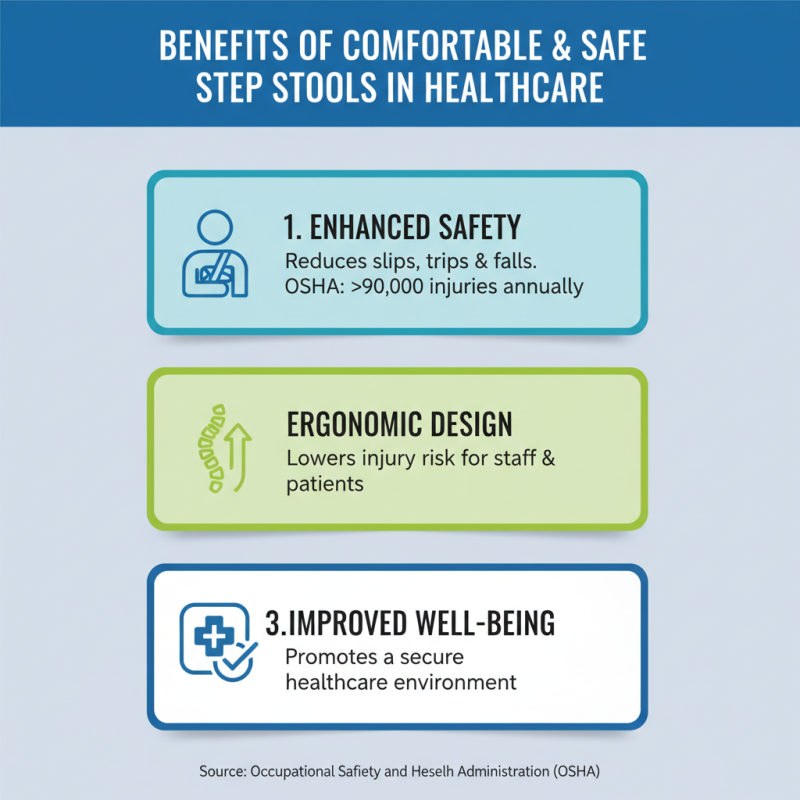
In healthcare settings, comfortable and safe step stools are essential for staff and patient well-being. An ergonomic design reduces the risk of injuries. According to a report by the Occupational Safety and Health Administration (OSHA), over 90,000 workplace injuries occur annually due to slips, trips, or falls. Proper step stools can significantly minimize these incidents.
Comfort is also key in medical environments. A study published in the American Journal of Industrial Medicine highlights that fatigue affects worker performance. Cushioned and stable step stools enhance comfort, allowing healthcare workers to focus on patient care rather than physical strain. This is especially important during long shifts when fatigue can lead to mistakes.
Moreover, safety features like non-slip surfaces are crucial. A survey by the National Institute for Occupational Safety and Health (NIOSH) indicates that 60% of healthcare professionals experience challenges related to access and mobility. Step stools with adequate grip ensure stability, reducing the likelihood of accidents. It's critical to reflect on these issues continuously to enhance workplace safety and comfort.
Top Five Recommended Surgical Step Stools for Professionals
When choosing a surgical step stool, comfort and safety are paramount. Surgeons and medical staff often work long hours. A good step stool can make a significant difference in their daily routines. The right choice enhances accessibility to surgical areas while minimizing strain on the body.
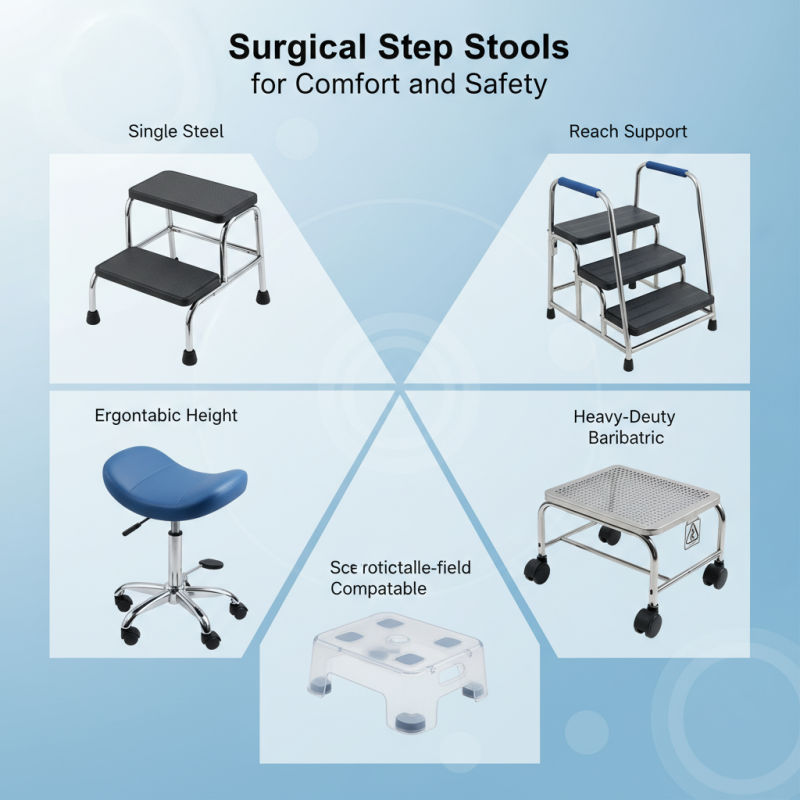
Five particular models stand out among healthcare professionals. These stools typically boast non-slip surfaces. This feature increases safety, reducing the chance of accidents. Also, a lightweight design allows for easy maneuverability. Some designs include handrails for added security. Such features prove essential in high-pressure environments.
However, some stools may lack adjustability. This limitation could affect their usability for different tasks. Additionally, certain models may not accommodate heavier weights. Users often express frustration over this issue. It’s essential to consider various factors before making a choice. Flexibility, stability, and ease of use should guide the selection process. Each step stool has its strengths, but no option is perfect. Users should reflect on their specific needs when selecting a model.
Maintenance and Care Tips for Surgical Step Stools
Maintaining surgical step stools is crucial for ensuring safety and comfort in medical settings. Regular inspections can reveal wear and tear. Look for damaged feet or unstable platforms. These issues can lead to accidents if not addressed. It’s essential to check for loose screws and bolts, which can compromise stability.
Cleaning is another important aspect of maintenance. Use mild disinfectants to wipe down surfaces after every use. Avoid harsh chemicals that could damage the materials. Pay attention to the non-slip features; they need to be clean and functional, as they play a key role in preventing slips. Stains and dirt can diminish their effectiveness.
Storage practices also make a difference. Stools should be stored in a dry place to prevent rust and corrosion. If they are stacked, ensure stability to avoid tipping over. Keep an eye out for any signs of wear during storage. Neglecting these details can lead to bigger issues. Regular maintenance not only extends the life of the stools but also enhances safety for everyone using them.