Why Choose Beet Root Juice Powder for Global Sourcing?
Beet Root Juice Powder is moving from niche nutrition shelves into functional foods, sports products, and beverage formulas. Industry analyses from Grand View Research and Future Market Insights identify beetroot-based ingredients as a growing global category. However, market growth does not guarantee consistent quality. Buyers still need evidence.
The scientific interest centers on naturally occurring dietary nitrate. In a landmark study, Professor Andy Jones and colleagues reported that “dietary nitrate supplementation reduces the O2 cost of submaximal exercise.” Their findings helped establish beetroot as a serious ingredient for performance research. Later reviews in Sports Medicine and the Journal of the International Society of Sports Nutrition found potential benefits for exercise efficiency, although results vary by dose, participant, and product format.
For international sourcing, powder offers practical advantages. It is lighter than liquid juice, easier to store, and suitable for measured formulations. A reliable supplier should provide nitrate testing, microbiological results, heavy-metal screening, allergen statements, and batch traceability. Color retention matters too. A bright red powder can lose appeal when exposed to moisture, heat, or oxygen.
The category is not flawless. “Natural” does not mean automatically standardized. Some products may show uneven nitrate levels or weak documentation. That is where purchasing decisions should slow down. Global buyers should compare certificates, origin records, extraction methods, and packaging performance before approving a supplier. The strongest choice is not always the lowest quotation. It is the supplier that can repeatedly deliver safe, traceable, and technically consistent Beet Root Juice Powder.
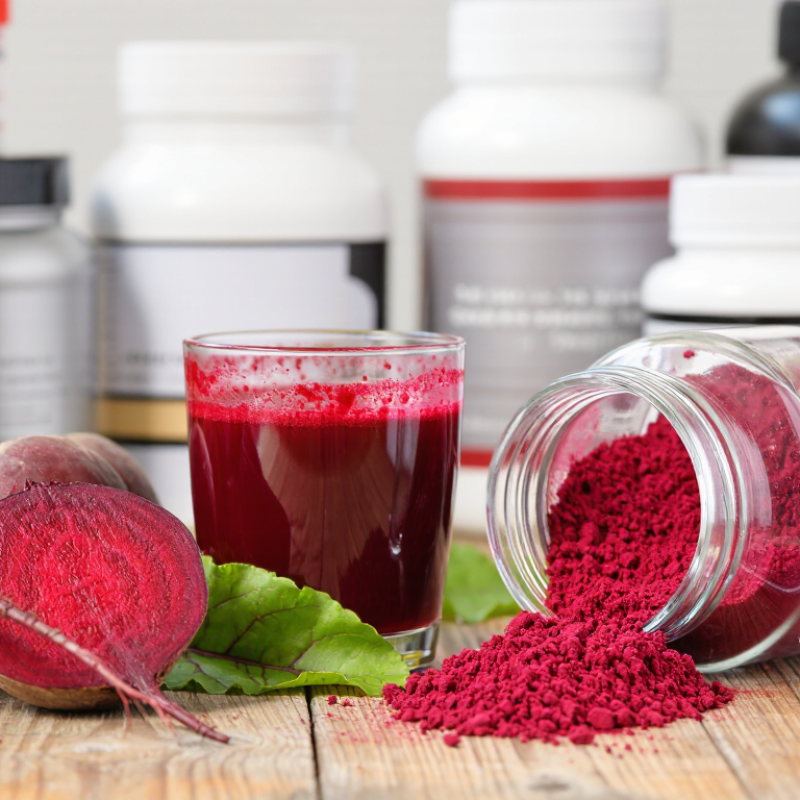
Beetroot juice powder is not simply dried beet juice. It is a concentrated ingredient with measurable nitrates, betalains, and controlled moisture. Nitrates may support nitric oxide production in the body, but their level can vary by soil, harvest, and processing. Betalains provide the familiar red-purple color and contribute antioxidant activity. A serious purchasing specification should state nitrate content, betalain content, particle size, microbiological limits, and moisture at no more than 5%. Low moisture helps reduce clumping and supports better storage stability. It does not guarantee quality alone.
Tips: Request a recent certificate of analysis for every batch. Check the testing method, not only the reported number. Ask about beet variety, origin, drying temperature, packaging, and shelf-life data. A retained sample can reveal changes in color, odor, or flow during evaluation.
For global sourcing, traceability matters as much as price. Suppliers should connect each lot to production records and provide clear allergen and contaminant statements. Independent laboratory testing can verify nitrate and betalain claims before shipment. I have found that bright color may look impressive, yet it cannot prove active compound levels. No single test tells the whole story. Storage conditions also deserve attention. Heat, humidity, and repeated opening can damage powder performance. A practical plan uses sealed moisture-barrier packaging, cool transport, and documented incoming checks. Some specifications still need refinement after real production trials. That is normal, and ignoring it is not.
Nitrate potency should be measured, not guessed from color or taste. A 250–400 mg nitrate serving equals roughly 4.0–6.5 mmol. The Australian Institute of Sport identifies 5–8 mmol as a commonly studied sports-nutrition range. This makes the lower end relevant, but not automatically superior.
EFSA’s scientific opinion reports an acceptable daily intake of 3.7 mg nitrate per kilogram of body weight. Total dietary intake still matters. Buyers should therefore request a batch-specific certificate of analysis, not rely on a generic specification sheet. Testing should identify nitrate content using a validated laboratory method, with sampling details and detection limits included. Small differences can change the calculation.
Powder quality varies.
In practical sourcing, ask whether the stated 250–400 mg refers to nitrate itself or total beet powder. Those numbers are not interchangeable. Moisture, storage temperature, and processing may also affect consistency. The Codex General Standard for Contaminants and Toxins supports disciplined contaminant control, but it does not replace supplier verification. A recent industry report may show rising demand for concentrated botanical ingredients, yet market growth does not prove potency. I would compare three consecutive production batches before approving a contract. One attractive test result is not enough.
Beet root juice powder travels through several control points before reaching an overseas buyer. Fresh roots may carry soil, microbes, or foreign matter. Drying reduces moisture, but it does not replace hygiene controls.
The Codex Alimentarius General Principles of Food Hygiene, revised in 2022, recommends HACCP as a preventive system based on seven core principles. For beet powder, a practical HACCP plan should examine receiving, washing, cutting, drying, milling, metal detection, and final packing.
ISO 22000 adds a broader food safety structure. It links hazard analysis with prerequisite programs, internal communication, corrective actions, and continual improvement. ISO’s 2023 Survey records tens of thousands of ISO 22000 certificates worldwide, showing wide adoption across food supply chains.
Still, certification is not magic. A valid certificate can exist beside a poorly controlled batch. I would verify the certificate scope, expiry date, certification body, and audited production site. Ask for recent batch records, moisture results, microbiological testing, allergen controls, and traceability evidence.
Small details matter. Can the supplier trace one carton back to a drying shift? Can they explain a failed swab without hiding it?
The World Health Organization estimates that contaminated food causes about 600 million illnesses and 420,000 deaths annually. That figure makes documentation more than paperwork. It becomes a sourcing decision. Some evidence may remain incomplete, and that deserves honest review rather than confident assumptions.
Beet root juice powder can concentrate contaminants when roots grow in polluted soil. Lead, cadmium, arsenic, and mercury deserve lot-specific control. The U.S. Pharmacopeia’s General Chapter <2232> lists oral daily exposure limits of 5 micrograms for lead, 5 for cadmium, 15 for arsenic, and 15 for mercury. These are exposure limits, not automatic product specifications. Importers should confirm the destination market’s requirements before purchasing.
Ask for an independent certificate of analysis from every production lot. It should show validated methods, detection limits, sample identity, and test dates. Inductively coupled plasma mass spectrometry can detect trace metals at very low levels. Representative sampling matters. One clean pouch cannot represent a poorly mixed pallet.
Microbial control needs equal attention. USP Chapters <61> and <62> describe testing approaches for microbial quality and specified organisms. Requirements vary by product category and country. Testing should commonly include total aerobic microbial count, yeast and mold, Salmonella, and Escherichia coli. Moisture and water activity also influence storage risk. Keep them controlled.
Small details matter.
A passing report does not guarantee every particle is safe. Sampling may miss a localized contamination spot. Supplier audits, sealed packaging, batch traceability, and retained samples create stronger evidence. Some buyers rely too heavily on a single COA. That is convenient, but not fully reliable. Clear specifications should define limits, corrective actions, and retesting rules before shipment.
Why Choose Beet Root Juice Powder for Global Sourcing?
Evaluate Global Sourcing Through COAs, MOQ, Shelf Life, and Freight Data
A reliable beet root juice powder program starts with batch evidence, not attractive samples. Each COA should identify the lot, test date, laboratory, moisture, microbiology, heavy metals, pesticides, and nitrate content. ISO/IEC 17025 accreditation strengthens confidence in laboratory competence. However, a COA is not a permanent guarantee. Test results must match the exact shipment.
MOQ affects more than the purchase price. A 500-kilogram MOQ may reduce the unit cost, yet create slow-moving inventory for smaller buyers. Check production lead time, pallet configuration, and remaining shelf life at arrival. Suppliers should provide stability data, storage conditions, and packaging specifications. “Best before” dates alone are weak evidence. Powder can absorb moisture quickly after opening.
Freight planning also needs real numbers. UNCTAD’s Review of Maritime Transport 2023 states that shipping carries over 80% of global merchandise trade by volume. Use current ocean quotations, container utilization, port charges, insurance, and inland delivery costs. The World Bank’s Logistics Performance Index 2023 compares logistics performance across 139 economies, but country averages cannot replace route-level checks. A spreadsheet may show savings while demurrage quietly removes them. I would request two freight scenarios: normal transit and delay exposure. That extra step feels excessive, but seasonal congestion can change the decision.
A practical sourcing view based on COA coverage, minimum order quantity, shelf life, and ocean freight planning benchmarks.
A strong global-sourcing option typically provides a complete COA covering identity, assay, moisture, microbiology, heavy metals, pesticides, and physical specifications. A 100 kg MOQ supports commercial trials, while a 24-month shelf life improves inventory flexibility. Freight should be evaluated as a landed-cost factor because ocean rates vary by origin, destination, season, and shipment size.
This website uses cookies to ensure you get the best experience on our website. Learn More
ACCEPT