Padel is growing quickly, and equipment choices are growing with it. The International Padel Federation’s World Padel Report 2024 describes a sport played across more than 100 countries, with millions of participants worldwide. That expansion brings more racket designs, materials, and marketing claims to compare. Numbers help. Feel matters.
A carbon padel racket may offer a firm response and a precise feel, but carbon content alone cannot tell you whether it suits your game. Shape, balance, weight, surface texture, and foam all influence how the racket behaves during a fast volley or a defensive lob. Playtomic’s Global Padel Report also tracks the sport’s expanding club and court network, reinforcing why equipment choices matter to an increasingly broad player base. Yet market growth does not prove that one racket fits everyone.
This guide explains how to compare carbon construction, racket shape, weight, and playing style when choosing a racket in 2026. It also looks at durability, comfort, and value, so buyers can assess products beyond bold claims on a box. Still, no specification sheet can predict exactly how a frame will feel after an hour on court. Treat performance claims as starting points, then consider your skill level, physical comfort, and preferred tactics. A little doubt is useful here. It can prevent an expensive mismatch.
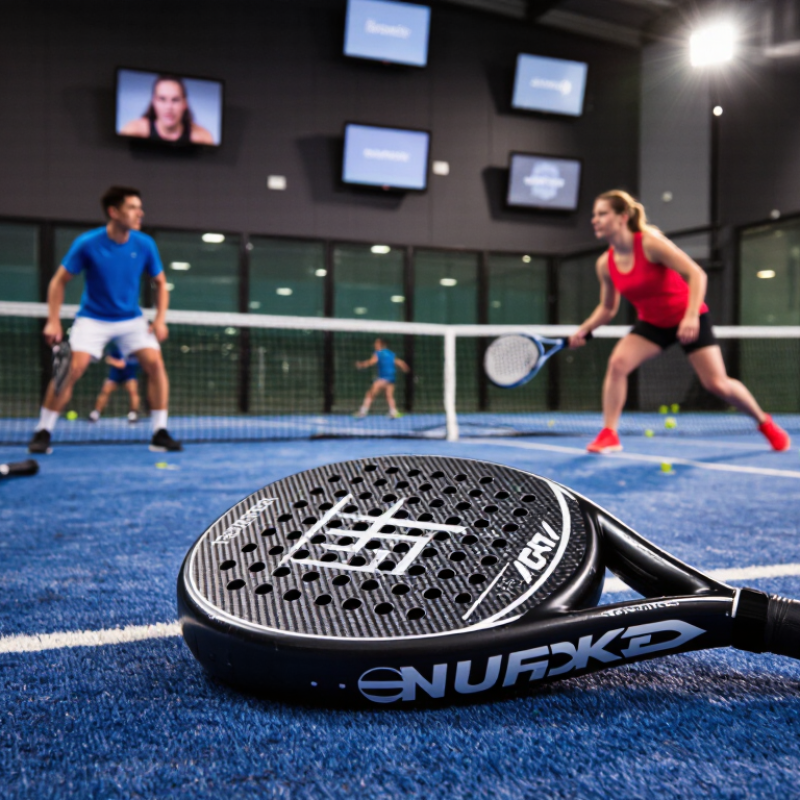
Carbon construction affects how a racket feels, but the word “carbon” alone tells you little. Most models combine carbon-fiber face layers with a foam core and a reinforced frame. The fiber weave, layer count, resin, and layup all influence stiffness and responsiveness. A firmer face may feel direct on fast volleys, while a more flexible build can feel softer at impact. Neither is automatically better. Feel matters.
The core and balance shape the experience, too. A head-heavy racket can add power on overhead shots, but may feel tiring during quick exchanges at the net. A lighter, evenly balanced model may be easier to maneuver, though it will not suit every player. Try a few controlled volleys and defensive shots, and notice vibration, sweet-spot size, and how easily you prepare the racket. Small differences matter. Carbon faces can also be damaged by hard impacts, so construction quality and careful handling count. I would not choose by weave labels alone; they do not reliably predict comfort or performance across different designs. Temperature, grip, and technique can change how a racket feels, which makes a brief trial useful but imperfect.
Choosing a carbon padel racket starts with your usual contact point, not the material label. A round shape often places its sweet spot near the center, helping with controlled blocks and off-center hits. A teardrop shape offers a middle ground for players who move between defense and attack. Diamond shapes generally place the sweet spot higher, which can help generate leverage on overhead shots. They may feel less forgiving when timing slips.
Balance changes how each shape feels in your hand. A lower balance can make quick volleys and defensive resets easier, especially near the net. A higher balance may add momentum to smashes, but can feel tiring during long exchanges. Feel matters. These are tendencies, not guarantees: racket weight, core firmness, frame construction, and grip size also affect handling.
If possible, test a racket with your own shoes and grip, then play a few volleys, lobs, and overheads. Notice whether you can prepare early without forcing your wrist. I would not choose a high-balance model just because it promises more power; that trade-off is easy to underestimate. Carbon faces also vary in stiffness, so shape alone cannot predict comfort. The right match may feel less dramatic, but more dependable across a full match.
| Playing Style | Recommended Shape | Typical Balance | Useful Racket Traits | Why It May Suit You | What to Consider |
|---|---|---|---|---|---|
| New or developing player | Round | Low to even | Large, centrally positioned sweet spot; moderate weight; easy handling | The forgiving shape and quicker handling can make it easier to control volleys and defensive shots. | Prioritize comfort and control. A carbon face alone does not guarantee a softer or more forgiving feel. |
| All-court player | Teardrop | Even to moderately head-heavy | Middle-ground sweet spot; balanced mix of maneuverability and attacking potential | A versatile option if your game includes both defensive rallies and opportunities to attack. | Check how quickly the racket moves at the net; a higher balance may feel slower during fast exchanges. |
| Experienced attacking player | Diamond | Head-heavy | Sweet spot positioned higher on the face; often designed for attacking strokes | The shape and balance can support overhead shots when the player has reliable timing and technique. | The smaller or higher sweet spot and slower handling may make off-center contact less forgiving. |
| Defensive or quick-net player | Round | Low to even | Easy maneuverability; comfortable grip; controlled response | A lower balance can help with rapid racket preparation, blocks, and reaction volleys. | Avoid choosing solely by shape: total weight, grip size, and swing feel also affect maneuverability. |
| Player seeking extra reach and leverage | Teardrop or diamond | Even to head-heavy | More mass toward the head; consider a manageable overall weight | A head-heavier feel can provide leverage on attacking shots, provided the player can swing it comfortably. | Test for arm comfort and control. More leverage can also mean slower preparation and greater fatigue. |
| Player comparing carbon faces | Choose by preferred shape first | Choose by preferred handling | Compare carbon layup, core, surface finish, weight, and balance together | Carbon-fiber construction is used in racket faces, but the overall feel depends on the full racket design. | Do not assume that a higher carbon specification automatically means more power, control, or durability. |
| Selection note: Shape and balance categories are general guides, not standardized performance ratings. Compare the racket’s actual weight and balance information where available, then test its comfort, swing speed, and control with your own grip and playing style. | |||||
How to Choose the Best Carbon Padel Racket in 2026?
Choosing Weight, Core Density, and Surface Texture
A carbon face alone does not make a racket right for you. Weight, balance, core feel, and surface finish all affect how it behaves during quick exchanges. The International Padel Federation’s 2024 World Padel Report estimates more than 30 million players worldwide. That growth makes clear advice useful, but the report does not rank racket specifications.
Start with weight and balance together. A lighter racket may feel easier to move at the net, while a heavier one can feel steadier on hard shots. Hold it in your ready position, then try several overheads. Notice whether your wrist or shoulder tires. Small details matter. Don’t choose by the scale alone.
Core density shapes the feel at impact. A firmer core may provide a crisp response; a softer one can feel more forgiving. But temperature and racket construction also change that sensation. Ask for density or hardness details when available, rather than trusting vague labels. Surface texture may help grip the ball for spin, yet technique and contact point matter more than roughness alone. Carbon weave counts are not a shortcut either. I’d test the racket before deciding, even if that makes the choice less tidy.
Compare practical racket-weight targets, then consider core density and surface texture to match your playing style.
How to read the chart: These are general selection ranges, not test results. Rackets commonly weigh about 340–375 g; balance and personal comfort also affect how heavy a racket feels.
Carbon weave labels such as 3K, 12K, or 18K describe the number of fiber filaments grouped in a bundle, not a simple quality ranking. A higher number does not automatically mean a stronger or better racket. Resin quality, fiber direction, and layer placement also shape stiffness and feel. Look for clear construction details, not just a large number on the product page. Small detail, big difference.
Durability depends on the whole build. Check that the frame edges are smoothly finished, the protective strip sits evenly, and the handle feels secure without rattling. A carbon face can handle regular play, but a hard collision with court glass or another racket may still cause cracks. Inspect the surface and frame after heavy knocks. A textured finish may help with spin, though it can wear with use; that trade-off is easy to overlook.
Choose a racket that suits your swing and playing frequency, rather than chasing the stiffest face. If possible, test it for several minutes and notice vibration, balance, and control on off-centre hits. I would not judge build quality from appearance alone; a glossy finish can hide little. Ask for weight tolerance, warranty terms, and clear care guidance before buying.
A carbon padel racket deserves a real court test, not a decision based on stiffness claims alone. Hold it for a few minutes and notice the balance, grip thickness, and pressure on your fingers. Then play gentle volleys and defensive shots near the glass. Does the racket feel stable, or does each off-centre hit twist your wrist? Feel it first.
For comfort, pay attention to vibration and forearm fatigue after several rallies, not just the first swing. A softer-feeling racket may be easier on your arm, but comfort also depends on balance, grip, and technique. Control is best judged with repeatable shots: aim volleys toward the same section of court and see how often the ball lands there. One perfect shot proves little. Small details matter.
Value means more than a low price or a carbon label. Compare the racket’s build, included protection, and expected durability with how often you play. If possible, borrow a similar model and use the same balls for a fair comparison. A racket that feels precise during warm-up may become tiring in a long match; I would not ignore that early impression, but I would test it again. Personal feel is imperfect evidence, so note what works and what does not before buying.
This website uses cookies to ensure you get the best experience on our website. Learn More
ACCEPT