For global buyers, a UV lamp’s price is rarely just the number on a product page. A compact replacement bulb may cost far less than an industrial UV-C module, yet wattage, wavelength, rated life, ballast, housing, and certification can change the final quotation. Shipping matters, too. A fragile quartz sleeve, spare driver, or custom connector can add costs before the lamp reaches the loading dock.
Market context helps, but it is not a price list. MarketsandMarkets’ UV disinfection equipment market report forecasts continued sector growth; its equipment-wide estimates should not be treated as the retail price of an individual lamp. For technical context, UV specialist Dr. James R. Bolton has described the process this way: “UV disinfection is a physical process, not a chemical process.” Buyers should therefore compare intended use and verified performance, not just wattage or headline price. Small differences matter.
This Top 10 guide examines Uv Lamp Price ranges for global buyers in 2026, while distinguishing replacement lamps, UV-C systems, and specialty units. It will consider quoted price, operating life, energy use, included components, warranty, and delivery terms. The figures may not line up perfectly across sellers; specifications and shipping assumptions often differ. That is worth admitting. A low quote can look attractive beside a bare lamp, then change when the ballast, installation parts, or freight appear. The comparison aims to make those trade-offs visible, not promise one universal price.
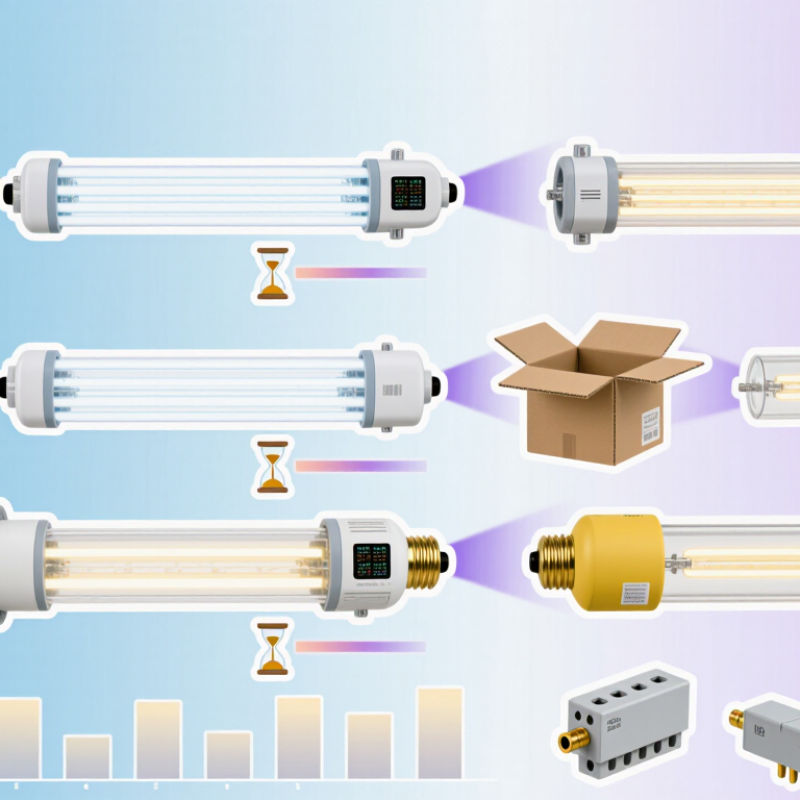
UV lamps are grouped by wavelength, output, and construction, not by price alone. Low-pressure UV-C lamps are commonly used in enclosed air-treatment units, water systems, and surface-disinfection equipment. A clear quartz tube may look simple, but output can fall as the lamp ages or its surface becomes dirty. Match the lamp to the equipment’s specified wavelength and electrical requirements.
UV-A lamps support adhesive and coating curing, fluorescent inspection, and some analytical processes. Their long-wave output suits tasks where controlled activation or visible fluorescence is needed. UV-B lamps appear in specialized medical and research equipment; treatment settings should be selected by qualified professionals. Different job. Different risks. Protective shields and operating instructions matter, since ultraviolet exposure can harm eyes and skin.
For global buyers comparing 2026 prices, account for wavelength, wattage, useful life, ballast compatibility, and replacement availability. A low purchase price may not mean a lower operating cost. Ask for test data and confirm the intended application before ordering. It is easy to focus on the price table; I would still check how performance is measured, because supplier figures may not use identical conditions.
Global buyers comparing UV lamps in 2026 should treat online prices as planning ranges, not fixed quotes. The figures below refer to individual lamps or modules in US dollars. Shipping, taxes, fixtures, and installation are excluded. Prices vary.
UV-A fluorescent tubes commonly cost $8–$35 per lamp.
Compact blacklight bulbs often range from $10–$40.
Standard low-pressure UV-C tubes typically cost $12–$60, while high-output versions may reach $40–$180.
UV-C LED modules range from $25–$250, depending on power and cooling needs.
UV-A inspection lamps generally cost $20–$120.
A UV resin-curing mercury lamp may cost $35–$180.
Industrial UV LED curing lamps often range from $80–$600.
Consumer nail-curing lamps commonly cost $15–$100.
Replacement UV lamps for water-treatment units are often $18–$90.
Prices rise with longer rated life, precise wavelengths, and tested output. Check the output.
Two lamps with similar wattage may deliver different usable UV intensity. I would verify compatibility and replacement intervals before comparing the cheapest listing; product specifications can be frustratingly vague.
Use suitable shielding and follow the equipment maker’s safety instructions, especially with UV-C.
Top 10 UV Lamp Prices for Global Buyers in 2026?
Key Factors That Influence UV Lamp Prices
UV lamp prices vary with wavelength, output, and construction. A lamp designed for a compact inspection unit is not comparable to one built for continuous industrial operation. Higher irradiance may require specialized materials, precise optical control, and more demanding quality checks. Those features can raise the purchase price. So can a custom lamp length or connector. Small details matter.
Service life also changes the real cost. A lower-priced lamp may need replacement sooner, while a longer-life model may reduce downtime and maintenance visits. Check whether quoted life refers to typical operating conditions, not just an ideal test. Power supplies, cooling needs, protective housings, and installation can add costs too. Shipping distance, order volume, and warranty terms affect the final quote. Ask suppliers for measured output, operating hours, and replacement guidance. Compare the same specifications, not just unit prices. Price comparisons are imperfect; buyers sometimes overlook compatibility until installation. That can become an expensive lesson.
| Rank | UV Lamp Type | Typical Specifications | Indicative Price (USD) | Common Applications | Main Price Factors |
|---|---|---|---|---|---|
| 1 | UVA blacklight fluorescent tube | Typically 15–40 W; peak output around 365 nm | $8–$50 | Inspection, fluorescence viewing, and insect traps | Tube length, phosphor coating, output consistency, and order quantity |
| 2 | Low-pressure UVC replacement tube | Typically 4–40 W; common germicidal wavelength near 254 nm | $5–$35 | Water treatment units, air systems, and enclosed disinfection equipment | Wattage, length, base type, ozone-free construction, and certified output data |
| 3 | Higher-output UVC replacement lamp | Typically 40–150 W; low-pressure mercury discharge | $20–$120 | Commercial water treatment and larger air-handling systems | Arc length, electrical requirements, lamp life, and compatibility with the ballast |
| 4 | UVB narrowband fluorescent lamp | Commonly centered near narrowband 311 nm; tube formats vary | $25–$120 | Specialist phototherapy equipment and controlled research applications | Wavelength band, length, output calibration, and equipment compatibility |
| 5 | UVC LED module | Typically 1–20 W; commonly available around 265–280 nm | $15–$250 | Compact disinfection devices, sensors, and prototype systems | Wavelength, radiant flux, thermal management, optics, and module integration |
| 6 | UVC lamp assembly with housing | Typically 10–100 W lamp, reflector, and protective enclosure | $60–$500 | Air and water treatment equipment and enclosed industrial systems | Housing material, shielding, electrical components, safety features, and assembly size |
| 7 | UV curing mercury-arc lamp | Typically 100–1,000 W; output spectrum depends on lamp design | $80–$600 | Industrial curing of inks, coatings, and adhesives | Power, arc length, spectral output, reflector compatibility, and expected operating life |
| 8 | UV curing LED lamp head | Typically 10–100 W; UVA output often near 365, 385, 395, or 405 nm | $150–$1,500 | Spot curing, printing, electronics, and adhesive bonding | Wavelength, irradiance, illuminated area, cooling design, and control electronics |
| 9 | Medium-pressure mercury UV lamp | Typically 1–10 kW; broad-spectrum industrial lamp | $250–$2,500 | High-throughput industrial curing and chemical processing | Power rating, arc length, quartz grade, cooling requirements, and custom dimensions |
| 10 | Far-UVC excimer lamp module | Often designed around 222 nm; module output and form factor vary | $800–$5,000 | Specialized research and engineered disinfection systems | Optical filters, measured spectral purity, output power, safety testing, and integration |
Pricing note: These are indicative 2026 USD planning ranges for lamp products or modules, not supplier quotations. Actual prices vary by specification, order volume, region, certification, and availability. Freight, taxes, installation, power supplies, and replacement parts may be excluded. UV radiation can be hazardous; select and operate equipment according to applicable safety requirements.
Regional prices for UV lamps can differ sharply, even when the listed output and housing look similar. Buyers in North America may see higher unit prices for locally stocked equipment, while some Asian suppliers offer lower factory quotes. Check wavelength, rated hours, ballast compatibility, and replacement availability before comparing prices. A low price means little if the lamp does not fit your system.
Shipping can change the apparent bargain. A single lamp may travel in a small parcel, but fragile tubes need protective packaging and careful handling. For larger orders, request the carton dimensions, gross weight, shipping method, and insurance terms. Air freight is faster, but can cost much more than sea freight. That estimate can be wrong. Seasonal congestion and fuel charges may also affect delivery costs.
Calculate the landed cost, not just the supplier’s unit price. Include freight, insurance, customs duties, local taxes, and any brokerage fees; these depend on the destination and product classification. Ask the seller for a detailed pro forma invoice, then confirm applicable charges with a qualified local customs broker. Keep a small allowance for exchange-rate movement. I once treated a shipping quote as final; it was not. A written, destination-specific quote makes regional comparisons more dependable.
A low purchase price can hide the real cost. Compare each quote by delivered UV output, not just lamp wattage or unit price. Add freight, import charges, installation, electricity, replacement lamps, and cleaning time. Ask suppliers for measured output at a stated distance and operating temperature. A spreadsheet helps. But its assumptions matter: a long service-life estimate is weak evidence without test conditions or warranty terms.
Safety belongs in the same comparison. The ICNIRP ultraviolet exposure guidelines set an effective exposure limit of 30 J/m² over an eight-hour workday. This is a wavelength-weighted limit, not a blanket guarantee that every lamp or installation is safe. Check shielding, interlocks, warning labels, and whether people could enter the exposure area during operation. The U.S. EPA’s 2006 Ultraviolet Disinfection Guidance Manual also treats delivered dose as dependent on factors such as UV intensity, flow, and water transmittance. For buyers, that means a low-cost unit needs suitable performance evidence for its intended application.
Request test reports, replacement-part availability, and warranty terms in writing. Compare the cost of a full operating year, including downtime if a lamp fails. One awkward gap remains: quoted lifetimes may not reflect dusty rooms, frequent switching, or local service delays. Ask how those conditions affect output and maintenance, then compare answers across suppliers.
This website uses cookies to ensure you get the best experience on our website. Learn More
ACCEPT