Demand for barbed wire for sale is often linked to practical needs: livestock control, boundary marking, and perimeter protection. Buyers also compare coating, wire gauge, barb spacing, and expected exposure to rain or soil. Small specifications matter. A thin zinc coating may not suit a wet, coastal site, while heavier wire can increase transport and installation costs. The right choice depends on the job, not simply the lowest price.
Industry data offers useful context, though it does not measure barbed wire alone. Grand View Research estimated the global fencing market at about USD 30.4 billion in 2023 and projected growth through 2030. Its figures cover many fence types, so they should not be treated as a barbed-wire sales forecast. The World Steel Association’s April 2024 Short Range Outlook projected global steel demand growth of 1.7% in 2024, to 1.793 billion tonnes. Steel demand is only an indirect indicator. Still, it helps explain why material availability and pricing can shift. Numbers need context.
For purchasers, high demand may reflect steady agricultural, infrastructure, and security projects, alongside buyers replacing worn or corroded fencing. A careful supplier should state product dimensions, coating details, packaging, and delivery terms clearly. Buyers should verify those details against site conditions and applicable local requirements. Product descriptions can be incomplete. That deserves a closer look. This guide examines the market factors behind demand and the practical checks that help buyers assess barbed wire for sale with confidence.
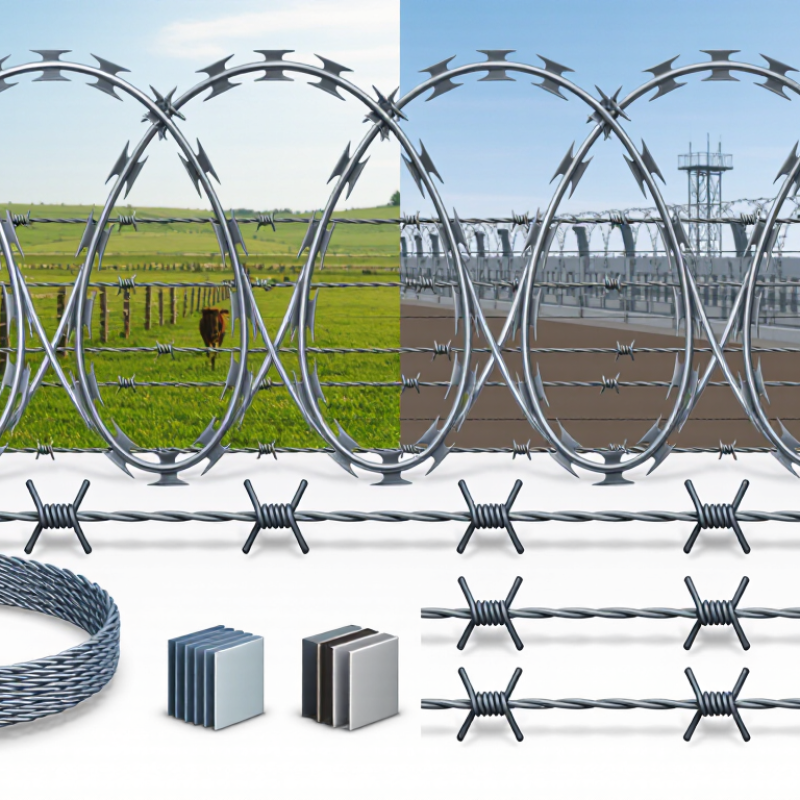
Barbed wire is a fencing material made from strong wire strands twisted together, with short, pointed pieces wrapped around them at intervals. Those points are called barbs. Their spacing and shape vary, but the basic purpose is the same: create a boundary that is difficult to cross casually. The wire is usually supported by posts, where tension keeps it from sagging. That matters.
The barrier works through both visibility and contact. Its sharp points discourage people and animals from leaning or pushing against it, while the stretched strands make the boundary easy to see. It does not make a fence impossible to cross; weather, loose fittings, or poor placement can weaken its effectiveness. Small details count. Rain can encourage rust, and branches may catch on the wire, so regular checks help spot damage early. Handling it also calls for care, since even a loose strand can cause a painful cut. The design sounds simple, but its safety and usefulness depend on sound materials, careful upkeep, and a suitable setting.
Barbed wire uses sharp points twisted around tensioned line wires to create a physical barrier and discourage passage. Its relatively simple construction makes it useful for fencing livestock and marking or securing boundaries.
Typical barb spacing varies by product and application. Closer spacing places barbs more frequently along the wire; the values shown are examples of commonly specified options, not market-demand measurements.
Where Barbed Wire Is Commonly Used
Barbed wire is most commonly used to mark and reinforce boundaries on farms and ranches. It can help keep cattle within pasture and discourage livestock from pushing through fence lines. The scale of agricultural land helps explain this demand: the USDA’s 2022 Census of Agriculture counted about 1.9 million farms across roughly 880 million acres. That figure describes farmland, not barbed-wire sales, but it shows why durable perimeter fencing matters. You’ll often see it stretched between sturdy posts along open fields, property edges, and grazing areas.
It is also used around some industrial yards, storage areas, and remote utility sites, where operators need a visible boundary and controlled access. But placement matters. A poorly maintained strand can sag, snag clothing, or injure people and animals. In my experience, the weak point is often not the wire itself; it’s a loose post or an overlooked break. Fencing plans should consider nearby paths, wildlife movement, and routine inspection.
Tips: Choose wire suited to the animals and site, use strong corner posts, and check tension and damage regularly. Keep it away from public access where practical, and make the boundary easy to see. The USDA acreage data is useful context, not a substitute for a site-specific assessment.
Demand for barbed wire often grows when farms, storage yards, and remote sites need a visible perimeter at a manageable cost. Farmers may use it to mark grazing areas and discourage livestock from pushing through ordinary fencing. That practical role matters. On a long fence line, buyers also weigh how quickly materials can be installed and replaced.
Price and durability influence what people look for when searching for barbed wire for sale. Galvanized wire can resist rust better than untreated steel, which matters in wet or coastal conditions. Still, no coating lasts forever. Buyers compare roll length, wire gauge, post spacing, and delivery costs, since a low price per roll may not mean a lower total project cost. Availability can be important too, especially when damaged sections need prompt repair before animals wander.
Demand also reflects changing land use and maintenance needs. New agricultural plots or expanded storage areas may require additional fencing, while storms and falling branches can create sudden repair work. Installation conditions deserve attention: gloves, eye protection, sturdy posts, and careful handling reduce the chance of cuts. Barbed wire is not a universal fix; poorly planned placement can make routine access harder. It is worth checking the site’s needs and applicable local requirements before choosing a design.
Demand for barbed wire rises when farms and facilities need a visible, durable boundary. In security settings, it can discourage casual entry around storage yards, equipment areas, and remote perimeters. It works best as one layer of protection, paired with clear sightlines, sturdy posts, and regular checks. It is not a substitute for thoughtful site planning.
Agriculture creates steady demand for different reasons. A ranch may use fencing to guide cattle away from roads or protect grazing sections. Wire type, spacing, and post strength matter; animals, soil, and weather all affect performance. Muddy ground can loosen posts, while fallen branches may bend strands. Small details matter.
Buyers often compare roll length, coating, wire gauge, and delivery costs before ordering. Coastal air and frequent rain can accelerate corrosion, so corrosion-resistant finishes may be worth considering. But higher durability can mean a higher initial price. There is no single best choice. A practical estimate should include installation time, maintenance, terrain, and the consequences of a damaged fence. Some buyers overlook upkeep. That can be costly. Inspecting the site before purchase helps match the fence to its real use, rather than relying on a generic specification.
| Market Dimension | Security Applications | Agricultural Applications | Factors Shaping Purchasing Needs |
|---|---|---|---|
| Primary purpose | Marks boundaries and adds a physical deterrent to perimeter fencing around sites where access needs to be controlled. | Helps define field and property boundaries and can be incorporated into fencing for livestock management. | Buyers consider the site’s purpose, required boundary coverage, access points, and the type of existing fence. |
| Typical settings | Perimeters of industrial properties, storage areas, utility sites, and other restricted-access locations. | Ranches, farms, pastures, and other rural properties with land or livestock boundaries to manage. | Site area, terrain, exposure to weather, and the availability of suitable posts and supporting fence materials. |
| Material and coating | Metallic-coated steel wire is commonly considered where outdoor exposure and corrosion resistance matter. | Coated steel wire may be selected for outdoor fences exposed to rain, soil moisture, and changing temperatures. | Wire construction and coating affect durability, handling, maintenance needs, and suitability for local conditions. |
| Product specifications | Purchases may specify wire gauge, tensile strength, barb spacing, and compatibility with the perimeter fence. | Specifications may reflect fence layout, intended livestock use, post spacing, and the number of fence lines. | Clear specifications help buyers compare products and plan installation; ASTM A121 covers metallic-coated carbon steel barbed wire. |
| Installation and upkeep | Correct tensioning, secure attachment, and regular inspection help maintain a functional perimeter barrier. | Installation must account for ground conditions, fence alignment, livestock management, and routine inspection. | Labor, tools, replacement needs, transport, and compatibility with existing fencing can influence the order size. |
| Why demand recurs | New perimeter projects, site changes, and repairs can create requirements for fencing materials. | New fencing, boundary adjustments, and repair of weather- or animal-damaged sections can prompt purchases. | Barbed wire is a physical fencing material, so demand is tied to installation, maintenance, and replacement needs rather than a single use. |
| Safety and compliance | Placement should account for access, warning requirements, and applicable local rules. | Fence design should consider animal welfare, people who may encounter the fence, and relevant local requirements. | Users should check applicable regulations and assess risks to people, livestock, and wildlife before installation. |
Choosing barbed wire starts with the job, not the lowest price. A boundary fence, livestock enclosure, and roadside barrier face different pressures. Match wire gauge, strand construction, and barb spacing to the animals, terrain, and expected tension. Close inspection matters. Look for an even zinc coating, securely twisted barbs, and consistent spacing; bare patches can become early corrosion points in wet conditions. ASTM A121 sets specifications for metallic-coated carbon-steel barbed wire, giving buyers a useful reference when comparing product descriptions.
Climate and maintenance also shape the choice. Coastal air, damp ground, and frequent contact with vegetation can shorten service life, so ask suppliers for coating details and test documentation rather than relying on appearance alone. The USDA’s 2022 Census of Agriculture counted 1,900,487 farms across 880.1 million acres in the United States. That scale shows why one fence specification cannot suit every site. Acreage is not fence length, either. I would also check compatibility with the planned posts and installation method; overlooking that detail can lead to sagging strands, extra labor, or repairs.
This website uses cookies to ensure you get the best experience on our website. Learn More
ACCEPT