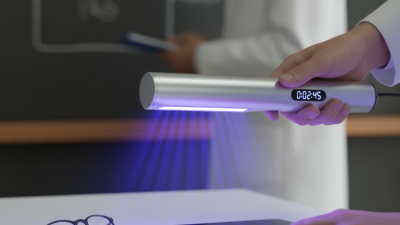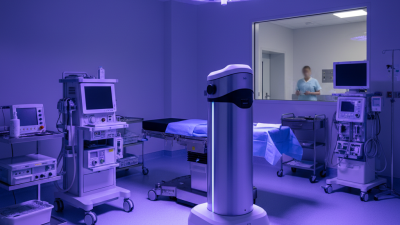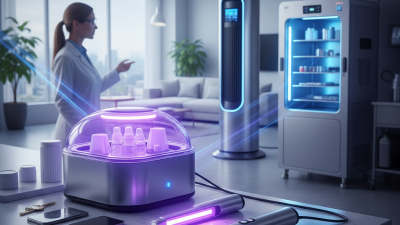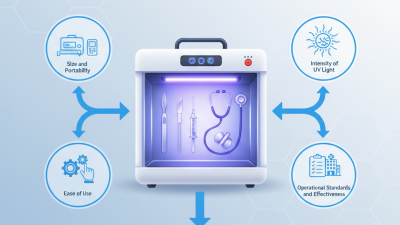
Choosing disinfecting lights safely requires more than comparing brightness, price, or attractive product claims. These devices may use ultraviolet-C energy, far-UVC technology, or antimicrobial visible light, and each option has different safety limits. A lamp that looks harmless can still injure eyes or skin when used incorrectly. The right choice depends on the room, intended users, exposure controls, and verified performance.
In practice, careful buyers should examine seven practical areas before purchasing. Check the light source and wavelength. Confirm whether the product has independent testing or recognized safety certification. Review exposure limits, shielding, automatic shutoff features, and occupancy restrictions. Ask how the device performs in a real room, not only in a laboratory. Dust, shadows, distance, and surface material can reduce disinfection results. Follow the manufacturer’s instructions closely.
Labels matter. So does maintenance.
Reliable guidance should come from qualified health, engineering, or electrical-safety professionals rather than anonymous online reviews. Never assume that a higher-powered device is automatically better. Excessive output may create greater hazards without providing useful coverage. Ozone production also deserves attention, especially in enclosed spaces. Even experienced users can overlook ventilation or forget that reflective surfaces change exposure patterns. That uncertainty is worth acknowledging. A safe purchasing decision should balance microbial-control goals with human protection, equipment quality, and realistic operating conditions. These seven tips offer a practical framework for asking better questions before bringing disinfecting lights into homes, workplaces, clinics, or public areas.
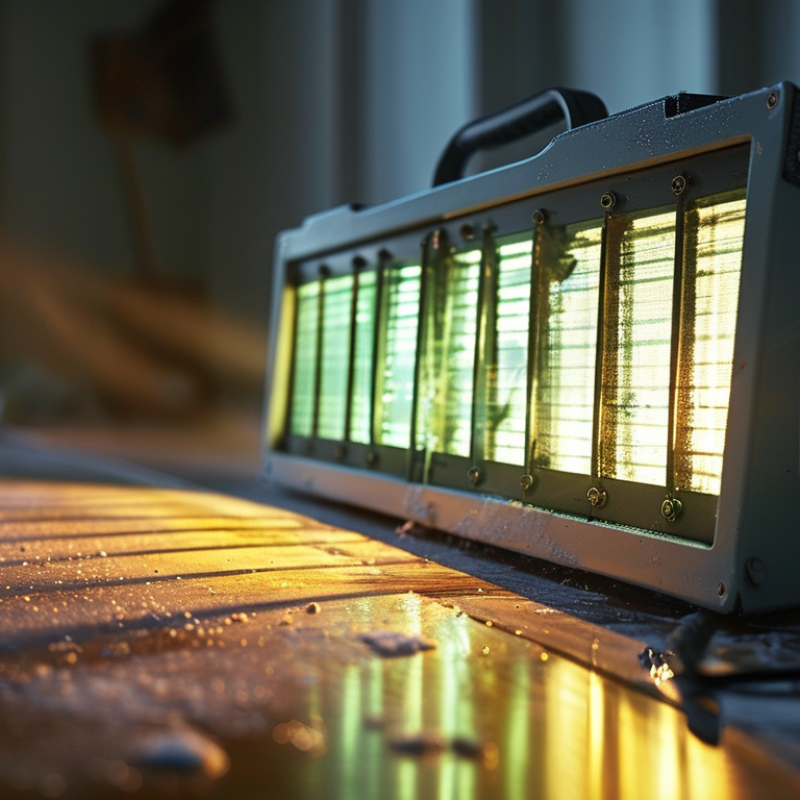
Choosing disinfecting lights safely starts with defining the UV-C scope. Target devices that emit within 200–280 nm, the recognized germicidal wavelength range. This energy can damage microbial DNA or RNA when the delivered dose is sufficient. Wavelength alone does not prove performance. Ask for independent test data, spectral measurements, and irradiance readings at the treatment surface. Check the distance and exposure time. Details matter.
Tip 1: Verify the exact spectrum, not a broad “UV” claim. Some devices produce UVA or UVB, which may not meet the intended disinfection target. Confirm that the output remains stable during operation. LEDs and lamps can vary. Tip 2: Check dose, not brightness. A bright purple glow proves very little. In practical evaluations, dust, stains, and shadows often block UV-C from reaching surfaces. A clean-looking room may still contain untreated areas.
Tip 3: Control human access. UV-C can injure eyes and skin, so enclosed systems, shields, or safety interlocks are essential. Never rely on smell, color, or a timer alone. Tip 4: Use calibrated measurement tools when possible. I would not trust every low-cost meter, because sensors can respond poorly across different wavelengths. Tip 5: Review lamp aging, ventilation, and maintenance records. Reflective interiors may create unexpected exposure. Tip 6: Consider air movement and surface geometry. Tip 7: Treat manufacturer claims as starting evidence, not final proof. I once assumed a longer cycle guaranteed better results. It did not, especially in shaded spaces.
Start with delivered dose, not lamp wattage. Dose equals irradiance multiplied by exposure time.
For example, 3 mW/cm² applied for 10 seconds delivers 30 mJ/cm². Measure irradiance at the target surface, not beside the lamp.
Distance matters sharply. A small increase can reduce intensity significantly.
The IUVA UV-C Fact Sheet identifies dose as the practical basis for evaluating germicidal performance. CIE 155:2003 also shows that effectiveness varies by wavelength and microorganism.
Check the weakest area.
Corners, textured surfaces, dust, and shadows may receive far less energy. Tip four: map several points with a calibrated radiometer. Tip five: verify the meter’s wavelength range and calibration date.
A displayed number is not automatically reliable. ASHRAE Handbook—HVAC Applications (2023) stresses that airflow, geometry, maintenance, and exposure location affect ultraviolet performance.
A quick calculation can still be wrong.
Protect people before increasing dose.
Use shielding, door interlocks, occupancy sensors, warning labels, and documented operating procedures. ICNIRP ultraviolet exposure guidance shows why direct eye and skin exposure requires strict control.
Never judge safety by visible brightness; some hazardous ultraviolet output is invisible.
Recheck delivered dose after lamp aging, sleeve fouling, or relocation. The imperfect part is maintenance: real rooms change, and one test rarely represents every condition.
7 Tips for Choosing Disinfecting Lights Safely
A verified ≥3-log reduction means 99.9% microbial inactivation under specific test conditions. It does not mean every surface becomes sterile. Ask for the complete laboratory report, not just a product brochure. Check the tested organism, light dose, exposure time, distance, and surface type. A result against one microorganism may not apply to another.
Look for measurements taken at the weakest point. Corners, shadows, textured materials, and blocked areas can receive much less light. During a site assessment, map the room and measure the fixture’s distance from target surfaces. Confirm whether the test used clean materials or realistic dirt levels. Real rooms are rarely perfect.
Safety matters as much as performance. Verify controls that prevent exposure to eyes and skin. Check occupancy sensors, door interlocks, warning signs, and maintenance instructions. Lamps may weaken over time, even when they still appear bright. Keep service records and replace aging components according to measured output.
Be cautious with impressive numbers.
A common mistake is treating 99.9% as a universal guarantee. I have learned that dose delivery is often the overlooked detail. Air movement, surface reflection, humidity, and fixture placement can change results. Ask an independent qualified professional to review the claim when the equipment will operate near people. Choose documented performance over bold wording, and keep the limitations visible to staff.
Verify ≥3-log reduction claims, equal to 99.9% microbial inactivation.
Log reduction expresses the base-10 decrease in viable microorganisms. A 3-log reduction means that 1 in 1,000 organisms remains, equivalent to 99.9% inactivation. When evaluating disinfecting lights, confirm the tested wavelength, exposure time, distance, irradiance, target organism, test method, and whether the claim applies to the intended environment.
Choosing disinfecting lights safely starts with controlling human exposure, not chasing the highest output. For 254 nm UV-C, direct skin and eye exposure can cause injury, even when no pain appears immediately. Check the lamp’s measured irradiance, installation height, shielding, interlocks, warning signs, and access controls. Use the applicable occupational exposure limit for the exact wavelength and exposure time. A timer alone is not enough.
A 222 nm source needs separate evaluation. Its potential safety advantage depends on verified spectral purity, optical filters, lamp aging, and actual measurements. Do not treat “far-UVC” as automatically harmless. Apply the current wavelength-weighted exposure limit from a recognized safety authority, then compare it with the device’s measured dose. Ask for independent test data, not only marketing claims. Sensors should stop the system when people enter the treatment area. That small detail matters.
I would also inspect ventilation, reflected surfaces, maintenance records, and replacement procedures. Dust can change performance. Filters can degrade. My early assumption that lower penetration meant zero risk was too simple. Safety depends on dose, distance, duration, and the complete product design. A qualified industrial hygienist or lighting safety professional should verify the installation before routine use, especially in occupied rooms.
Choosing disinfecting lights safely starts with engineering controls, not warning labels. Install shields that block direct UV-C paths, including reflections from polished metal and glass. Use door interlocks that cut power when a cabinet opens. The system should fail safely after a sensor fault or power recovery. A forgotten gap can matter.
IEC 62471:2006 provides the photobiological safety framework for classifying lamps and lamp systems. It evaluates hazards such as ultraviolet exposure, retinal blue-light exposure, and infrared heating. Ask for a documented risk assessment, not only a product certificate. Request spectral output, irradiance measurements, and the applicable risk group. CIE’s 2020 position statement notes that germicidal UV-C can injure skin and eyes, even when exposure feels brief. The absence of visible brightness proves nothing.
Measure the installed system at operator positions. For 254-nanometre UV-C, ICNIRP’s guidance identifies an eight-hour effective exposure limit of 30 J/m², but limits vary by wavelength and exposure pattern. Use calibrated equipment and retain test records. Add warning lights, keyed controls, and restricted access during operation. Interlocks should be tested routinely. They can fail. A practical mistake is trusting the factory test after room changes, cleaning, or fixture replacement. Recheck shields and reflected dose whenever the layout changes. Some designs still need improvement. That is worth admitting.
| Tip | Safety Dimension | What to Check | Recommended Safeguard or Practice | Typical Risk if Ignored | Verification Evidence |
|---|---|---|---|---|---|
| 1 | Confirm the radiation type and wavelength | Identify whether the device emits germicidal ultraviolet radiation, including UV-C, and check the stated peak wavelength and spectral output. | Use the product’s independent test report and installation documentation. Do not assume that a visible blue or violet glow indicates safe or effective disinfection. | High Uncontrolled ultraviolet exposure can injure skin and eyes, while an unsuitable spectrum may provide inadequate microbial inactivation. |
Complete spectral measurement, manufacturer test data, and a clearly labeled radiation source. |
| 2 | Apply IEC 62471 photobiological safety assessment | Review the lamp or complete luminaire classification for ultraviolet, retinal blue-light, thermal, and other relevant photobiological hazards. | Prefer equipment assessed under IEC 62471 or an applicable national adoption. Review the stated risk group, measurement conditions, exposure limits, and required viewing distance. | High A device that appears low-power may still exceed exposure limits at close range or during prolonged operation. |
Obtain an IEC 62471 assessment or equivalent laboratory report covering the final installed configuration. |
| 3 | Install physical shields and prevent line-of-sight exposure | Check whether direct and reflected radiation can reach occupants, visitors, maintenance staff, or adjacent rooms. | Use opaque enclosures, baffles, door seals, ceiling or upper-room shielding, and non-reflective interior finishes where appropriate. Avoid relying on warning labels alone. | High Direct or reflected UV exposure may occur even when the light source is outside the user’s normal field of view. |
Site survey, shielding layout, reflected-irradiance measurements, and documented clearance distances. |
| 4 | Use door interlocks and access controls | Determine whether the system can operate while a room, cabinet, duct, or enclosure is open or occupied. | Install fail-safe door interlocks, keyed controls, guarded switches, lockout/tagout provisions, and clearly visible status indicators. Ensure the light cannot restart unexpectedly after a power interruption. | High Unplanned activation during entry or servicing can expose people before they have time to respond. |
Functional interlock testing, restart-behavior test, maintenance procedure, and recorded inspection schedule. |
| 5 | Control occupancy and operating time | Assess whether motion sensors, occupancy sensors, timers, or remote controls are needed for the intended space. | Use presence detection or scheduled operation for unoccupied-room systems. Provide a pre-start delay, audible or visual warning, emergency shutoff, and a clearly defined re-entry procedure. | Medium to High People may enter during a cycle or assume that a temporary shutdown has fully isolated the radiation source. |
Sensor coverage test, timing record, alarm test, emergency-stop test, and documented re-entry interval. |
| 6 | Match irradiance and exposure time to the objective | Verify the irradiance at the target surface, distance from the source, exposure duration, surface shadowing, and required microbial reduction. | Calculate dose using the relationship dose = irradiance × time, with consistent units. Validate the dose at the least-exposed target locations rather than relying only on lamp wattage. | Medium Insufficient dose may fail to achieve the intended disinfection result; excessive dose can increase safety and material-degradation concerns. |
Calibrated radiometer readings, dose map, cycle record, target-organism validation, and periodic performance checks. |
| 7 | Plan PPE, maintenance, and verification | Review who may service the equipment, how lamp aging is tracked, and whether filters, sensors, shields, and interlocks remain effective. | Restrict access to trained personnel. Use suitable UV-rated eye and skin protection when exposure cannot be eliminated, follow lockout/tagout procedures, clean or replace lamps as specified, and keep maintenance records. | Medium Output can decline with aging or contamination, while maintenance activities can create exposure when safeguards are bypassed. |
Training log, PPE inspection, lamp-hour record, calibration certificate, preventive-maintenance checklist, and incident-response plan. |
This website uses cookies to ensure you get the best experience on our website. Learn More
ACCEPT