How to Choose the Right UV Sterilizer for Medical Equipment Needs?
Choosing the right UV sterilizer for medical equipment needs can be a daunting task. Dr. Emily Carter, a leading expert in infection control, once said, "Selecting the appropriate sterilizer impacts patient safety significantly." This statement underlines the importance of careful consideration in this field.
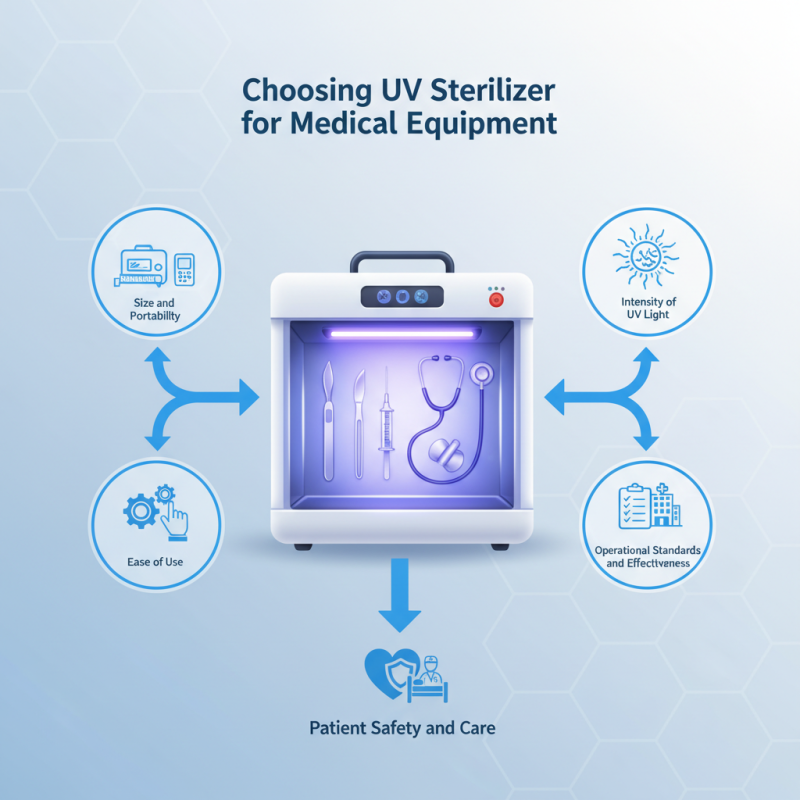
Many health facilities rely on UV sterilizers to eliminate pathogens from their tools. Yet, numerous products on the market vary widely in effectiveness. The right choice should reflect the specific requirements of the medical setting. Factors like size, portability, and intensity of UV light are critical. It's essential to recognize that not all equipment offers the same level of sterilization.
However, the challenge lies in navigating these options. Some sterilizers may not meet operational standards. Others may prove cumbersome to use daily. Without proper evaluation, hospitals risk compromising their sterilization protocols. Reflecting on these aspects can lead to a more informed choice in UV sterilizer medical equipment, ultimately enhancing patient care and safety.
Understanding UV Sterilization: Principles and Efficacy in Medical Settings
UV sterilization is a powerful technique used in medical settings. It employs ultraviolet light to eliminate harmful microorganisms. This method disrupts the DNA of bacteria and viruses, rendering them inactive. It provides a credible option for sanitizing medical equipment that is difficult to disinfect through traditional means. However, a detailed understanding is essential.
The effectiveness of UV sterilization can vary widely. Factors like exposure time and distance from the light source influence outcomes. Certain shadows can significantly reduce effectiveness. Not all surfaces receive the same UV dose. Therefore, it's critical to position items correctly for thorough sterilization. Regular maintenance of UV equipment is necessary, as the intensity of UV light can diminish over time.
Consideration of the surrounding environment is crucial. Surfaces should be cleaned before UV treatment, as dirt can shield pathogens from UV light. Human factors, too, play a role. Staff training in proper usage is often overlooked yet vital. Engaging routine checks and assessments can improve overall efficacy. Enhanced awareness of these nuances will lead to better decisions in selecting the right UV sterilizer for specific medical equipment needs.
Key Factors to Consider When Selecting a UV Sterilizer for Medical Equipment
When selecting a UV sterilizer for medical equipment, several key factors must be considered. Ease of use matters significantly. The sterilizer should have simple controls. It should also offer clear instructions. This ensures that staff can operate it without confusion. Training might still be necessary, reflecting on usability challenges.
The effectiveness of the UV sterilizer is crucial as well. Look for systems that provide consistent UV-C output. Variability in performance can lead to ineffective sterilization. It’s important to observe testing reports on the sterilizer's effectiveness. Also, consider the size and capacity. Smaller units may not handle bulk equipment, which can be limiting for busy facilities.
Lastly, check for safety features. The device should have options to prevent accidental exposure to UV light. This sounds simple, but many units overlook this critical detail. Some devices might be effective yet lack user safety, creating a potential hazard. Reflecting on these factors will guide your decision-making process. Consider feedback from peers who faced similar challenges, as this could help refine your choices.
Comparing Different UV Sterilization Technologies: UV-C vs. Other Methods
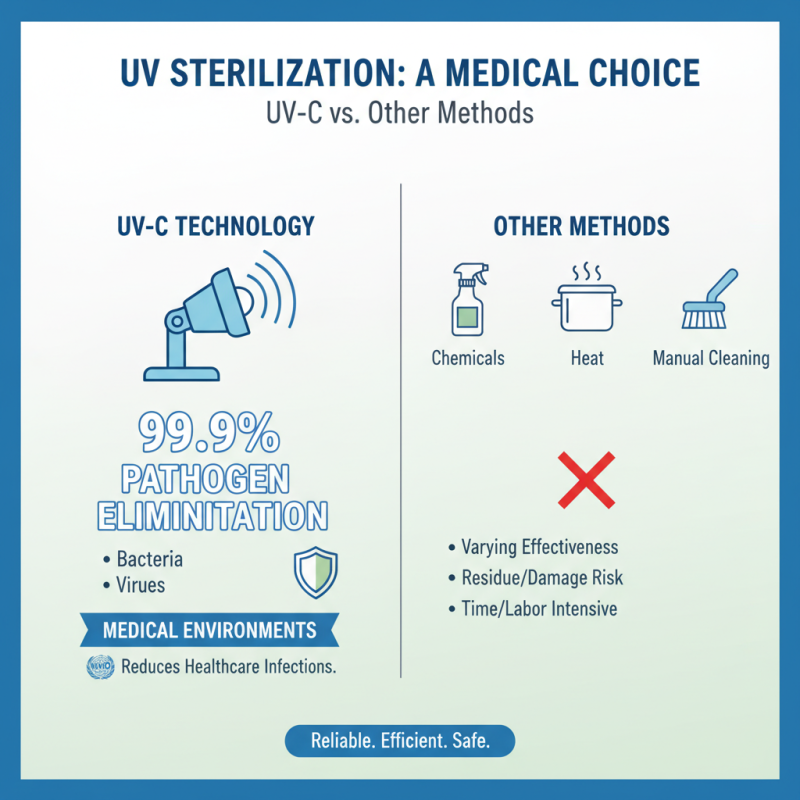
When selecting a UV sterilizer, understanding the differences between UV-C and other sterilization methods is crucial. UV-C technology effectively eliminates up to 99.9% of pathogens, including bacteria and viruses. This makes it a reliable choice for medical environments. According to a recent report by the World Health Organization, UV-C light can reduce healthcare-associated infections significantly.
However, alternatives like chemical sterilization and heat methods have their pros and cons. Chemical methods may leave residues that require additional cleaning, while heat sterilization may damage sensitive equipment. A study published in the Journal of Hospital Infection found that while heat is effective, it may not reach every crevice of complex instruments. In contrast, UV-C provides a more uniform approach in most cases.
While UV-C has its advantages, it’s not foolproof. Direct exposure to UV light can pose risks to human skin and eyes. This necessitates proper shielding and safety measures. Not all surfaces absorb UV light evenly, which can lead to areas that remain inadequately sterilized. Therefore, you must ensure complete coverage during the sterilization process. Understanding these nuances is essential for making an informed decision for medical equipment needs.
Industry Standards and Compliance for UV Sterilizers in Healthcare Facilities
When selecting a UV sterilizer for medical equipment, compliance with industry standards is crucial. Healthcare facilities must adhere to guidelines set by regulatory bodies. These standards ensure that the sterilization process is effective and safe. UV sterilizers should meet or exceed these guidelines to be considered reliable. This often involves passing rigorous testing and validation procedures.
Understanding the specific requirements for different equipment types is also important. Not all UV sterilizers are designed equally. Some may not handle certain materials effectively. For instance, delicate instruments may require special considerations. Operators need to be aware of potential limitations. Regular calibration and maintenance checks can help ensure optimal performance.
It’s also vital to assess the scientific evidence behind the effectiveness of UV sterilization. Some studies may contradict claims made by manufacturers. Facilities should stay updated on research developments in this area. Evaluating these findings can guide better decision-making. Ultimately, making an informed choice requires ongoing learning and adaptation.
How to Choose the Right UV Sterilizer for Medical Equipment Needs? - Industry Standards and Compliance for UV Sterilizers in Healthcare Facilities
| Feature |
Description |
Standard Compliance |
Recommended Use |
| Wavelength |
Typically around 254 nm, effective for germicidal action. |
FDA, CDC guidelines |
General surface sterilization |
| Intensity |
Measured in mW/cm², higher intensity leads to shorter sterilization time. |
ANSI/AAMI/ISO 11137 |
Medical device sterilization |
| Contact Time |
Duration UV light must be in contact with the surface. |
CDC Infection Control Guidelines |
Instrument sterilization |
| Safety Features |
Includes features such as automatic shut-off and UV shields. |
OSHA regulations |
Safe handling in clinics |
| Portability |
Some units are designed for easy transport and setup. |
N/A |
Field use and mobile clinics |
Evaluating UV Sterilizer Performance: Metrics and Validation Processes
When evaluating UV sterilizers for medical equipment, performance is crucial. The effectiveness of sterilization depends on several metrics. One key metric is the UV dose, which is the intensity and duration of UV light exposure. Too low a dose may not eliminate all pathogens. Measure the strength and duration carefully to ensure safety.
Another important factor is the validation processes. Regular testing is needed to confirm that the sterilizer meets industry standards. Documenting results can help in maintaining compliance. Evaluate how often these validations occur. Gaps in testing can lead to risky situations.
Tips: Use test strips to monitor UV intensity continuously. This can help in identifying issues before they become critical. Also, train staff on proper sterilizer use and maintenance. Proper training prevents misuse and enhances safety. Regularly review performance logs. This promotes a culture of continuous improvement, ensuring all aspects of sterilization are addressed.