


What Is UV Light for Cleaning Rooms and How Does It Work?
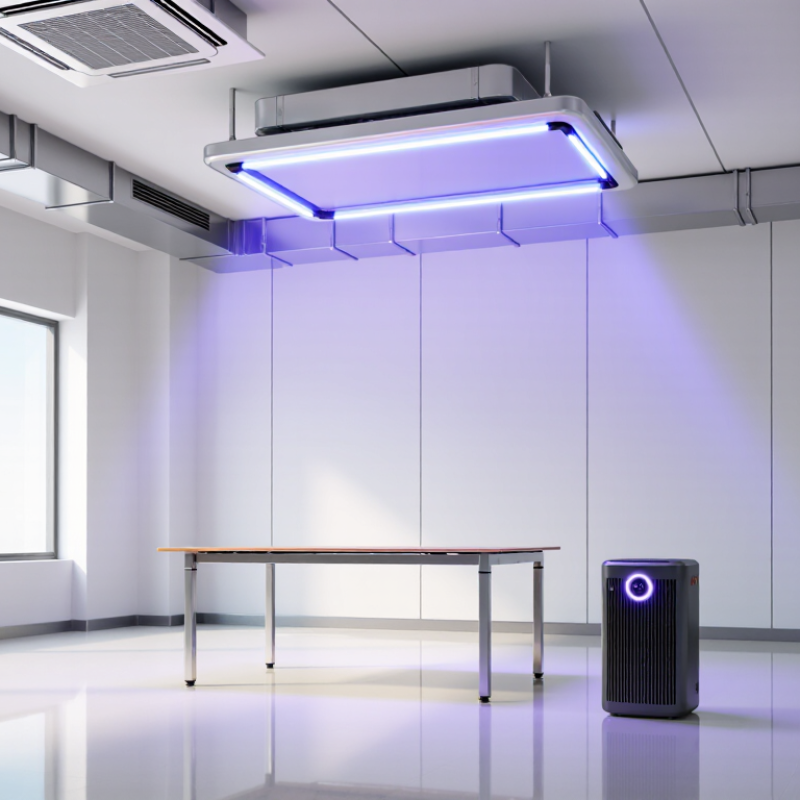
A room can look spotless while invisible particles remain suspended in its air. That is where uv light for cleaning rooms may help. Properly designed ultraviolet germicidal irradiation systems use UV-C energy to damage microorganisms, reducing their ability to reproduce. NIOSH’s 2009 upper-room UVGI guidance discusses 254-nanometer lamps and stresses careful placement, airflow, and maintenance. ASHRAE’s 2023 position document also treats air-cleaning technologies as part of a broader indoor-air strategy, not a stand-alone fix.
The principle is simple. The installation is not. A ceiling-mounted fixture may disinfect air circulating through its UV-C zone, while a portable unit treats air inside its own chamber. Neither automatically sanitizes every tabletop, shadowed corner, or fabric surface. Performance depends on dose, exposure time, room airflow, and the specific organism. Harvard physician-scientist Edward Nardell’s work supports a practical takeaway: “UVGI should complement ventilation and other infection-control measures, not replace them.” This is a paraphrase, not a verbatim quotation.
That distinction matters. NIOSH guidance makes clear that system design and safe operation are essential; direct exposure to UV-C can injure eyes and skin. A sealed purifier beside a desk is not the same as a professionally designed upper-room system. Results also vary. UV light is useful, but it is not magic. Before choosing a device, check its wavelength, independent performance testing, room-size claims, and operating instructions. A little skepticism is healthy.
What UV Light Means in Room Cleaning
UV-C is the part of ultraviolet light most often discussed in room cleaning. The International Ultraviolet Association places germicidal UV-C between 200 and 280 nanometres. It can damage the DNA or RNA of microorganisms, stopping them from multiplying. The U.S. Food and Drug Administration warns that performance depends on wavelength, exposure time, distance, and surface coverage. A lamp may look powerful, yet shaded areas can receive almost no useful dose.
What UV light means in room cleaning is controlled disinfection, not ordinary cleaning. It does not remove dust, grease, or dead skin from a desk. ASHRAE guidance describes ultraviolet germicidal irradiation as a supplement to ventilation and physical cleaning. In practice, a dusty grille, open drawer, or chair underside can weaken results. Direct UVC can injure eyes and skin, so occupied-room devices require verified safety controls. Far-UVC near 222 nanometres is still being evaluated, and “safe” should not mean “proven everywhere.”
Tips: Clean surfaces first. Keep lamps away from people and pets unless certified for occupied use. Check the measured dose, not only the lamp’s wattage. Record room size, exposure time, and shadowed areas. I would also question dramatic kill-rate claims without independent testing, because real rooms are rarely empty, smooth, or perfectly aligned.
What Is UV Light for Cleaning Rooms and How Does It Work? - What UV Light Means in Room Cleaning
| Dimension | What It Means | Practical Room-Cleaning Note |
|---|---|---|
| UV light | Ultraviolet light is electromagnetic radiation beyond the violet end of the visible spectrum. UV-C, typically defined as wavelengths from 200 to 280 nanometers, is the range commonly used for germicidal applications. | “UV cleaning” usually refers to germicidal UV-C treatment, not ordinary visible or UVA light. |
| How it works | UV-C can damage the genetic material of microorganisms, preventing them from reproducing. The effect depends on the organism and the UV dose it receives. | UV-C reduces the ability of exposed microbes to replicate; it does not physically remove dust, soil, or other debris. |
| Common wavelengths and sources | Germicidal systems commonly use low-pressure mercury lamps near 254 nm or UV-C LEDs, often in the approximate 265–280 nm range. | The device’s wavelength and measured output affect performance. Follow the equipment specifications rather than assuming all UV lamps work alike. |
| UV dose | UV dose is determined by the UV intensity reaching a surface or air space and the exposure time. Greater distance, obstruction, or shorter exposure can reduce the dose received. | There is no single exposure time that applies to every room, device, microorganism, and setup. |
| Line of sight and shadows | UV-C travels in straight paths and does not reliably reach surfaces hidden behind furniture, under objects, or in other shadowed areas. | Room layout and placement matter. A surface outside the lamp’s direct exposure may receive little or no effective UV dose. |
| Room air treatment | Upper-room germicidal UV systems are designed to treat air in the upper part of a room, while air circulation moves air through the irradiated zone. | These systems require appropriate design, installation, and air mixing; they are different from a portable lamp aimed at room surfaces. |
| People and pets | Direct exposure to germicidal UV-C can injure eyes and skin. Risk depends on wavelength, intensity, and exposure duration. | Use only systems designed for the intended occupied or unoccupied setting. Follow safety instructions and avoid direct exposure. |
| Cleaning and disinfection | Cleaning removes visible soil and organic material; UV-C is a treatment method that may reduce viable microorganisms on directly exposed areas. | UV-C should not be treated as a replacement for routine cleaning or for other recommended infection-control measures. |
| Ozone considerations | Some UV wavelengths below about 240 nm can generate ozone from oxygen in the air; whether a device produces ozone depends on its design and output spectrum. | Check product specifications and safety guidance for ozone emissions and ventilation requirements. |
| Maintenance | Lamp output can decline with use, and dust or residue on a lamp or fixture can reduce the UV reaching the target area. | Follow the manufacturer’s instructions for cleaning, output checks, and replacement intervals. |
Related Posts
-
Why Choose UV Light Cleaners for Hospitals in China?
-
How to Choose a UV Disinfection System for Hospitals?
-
Top Benefits of Using a UVC Sterilizer for Home and Health?
-
Why Choose a UVC Machine for Global Sourcing?
-
How to Choose UV Light Decontamination Systems?
-
7 Best UV Light Disinfectants for Global Buyers?