


2026 Best Pulsed UV Disinfection Systems for Global Buyers
Choosing among the 2026 Best Pulsed UV Disinfection Systems requires more than comparing lamp power or advertised flow rates. Global buyers need evidence from real operating conditions, not impressive brochures. A municipal plant, food-processing line, and hospital water system may face completely different challenges.
Professor Karl G. Linden, a recognized UV disinfection researcher, has stated, “UV disinfection is a physical process, not a chemical one.” That principle remains important when evaluating pulsed UV disinfection equipment. The system must deliver sufficient ultraviolet energy across the entire treatment zone. Water clarity, pipe geometry, lamp aging, sensor calibration, and flow changes can affect the result.
Small details matter.
This guide examines systems through practical buyer concerns, including validated dose delivery, microbial reduction, energy use, maintenance access, control interfaces, and global service support. It also considers installation realities, such as limited plant space, unstable electricity, replacement-parts availability, and operators working under harsh conditions.
Not every published performance figure deserves immediate trust. Some tests use cleaner water than buyers will encounter. Others provide limited information about validation methods or maintenance intervals. That weakness should be acknowledged, not hidden.
Reliable selection depends on transparent testing, credible documentation, and experience in comparable facilities. Buyers should request independent validation, operating data, warranty terms, and clear commissioning procedures. Pulsed UV disinfection can offer rapid, chemical-free treatment, but it is not a universal shortcut. The best system is the one that performs consistently when the water quality changes, the lamps age, and the real plant becomes less predictable.
What Pulsed UV Disinfection Systems Are and How They Work
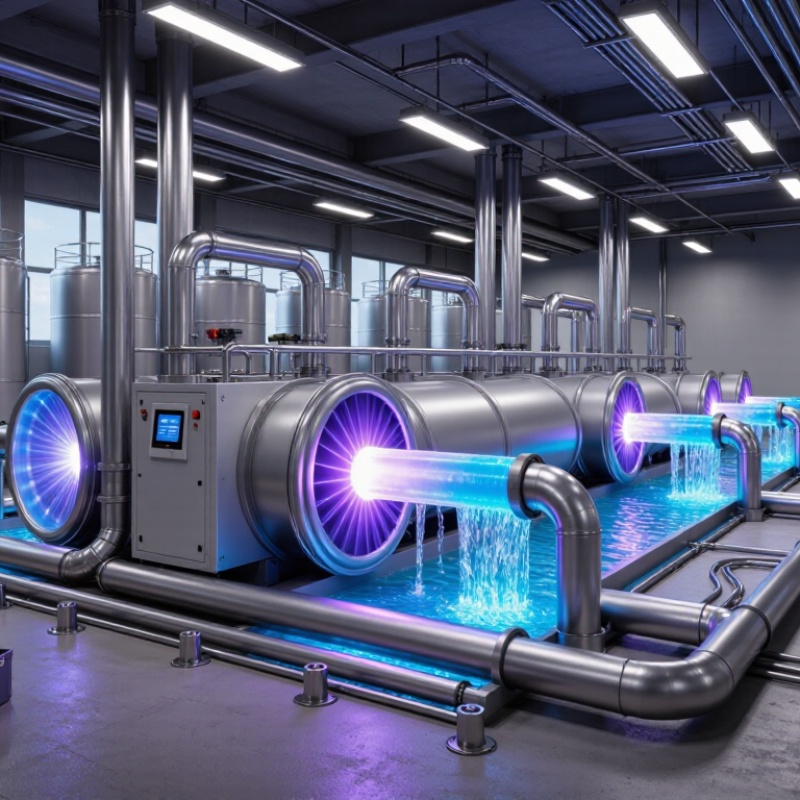
Pulsed UV disinfection systems use powerful flashes of ultraviolet light to reduce microorganisms on surfaces, in air, or in water. Many systems use xenon lamps, which produce broad-spectrum light during extremely short pulses. UV energy can damage microbial DNA and RNA, preventing reproduction and limiting infection risks. Some studies also discuss rapid heating and photochemical effects, but performance depends on the equipment and target organism.
The working process is more practical than it first appears. A controller sends electrical energy into the lamp, creating repeated high-intensity flashes. A chamber, conveyor, or treatment tunnel positions the target at a calculated distance. Sensors may monitor lamp output, pulse count, temperature, and exposure time. Operators must also consider shadows, surface texture, water turbidity, flow rate, and organic residues. These details can decide whether the delivered dose matches the tested dose.
Clean-looking equipment can still leave protected areas untreated. That is easy to underestimate. Experienced operators verify performance with calibrated radiometers, biological indicators, or independent laboratory testing. They also inspect lamp windows and reflectors, because dust and deposits reduce useful output. Pulsed UV is not a universal replacement for cleaning. It works best as a controlled treatment step within a documented sanitation process. Results should be reviewed regularly, especially when product speed, geometry, or environmental conditions change.
2026 Best Pulsed UV Disinfection Systems for Global Buyers - What Pulsed UV Disinfection Systems Are and How They Work
Technical comparison guide based on commonly published pulsed-ultraviolet engineering parameters and recognized UV disinfection practices
| Data Dimension | Typical or Recognized Value | What It Means | Key Buyer Considerations |
|---|---|---|---|
| Disinfection Principle | Photochemical inactivation by ultraviolet radiation | UV energy damages microbial DNA and RNA, preventing replication. Pulsed systems deliver high-intensity flashes rather than continuous illumination. | Confirm that the supplier provides validated microbial reduction data for the target organism and application. |
| Primary UV-C Germicidal Band | Approximately 200–280 nm | UV-C is the main germicidal region. Many pulsed systems also produce energy outside this band because the flash source has a broader emission spectrum. | Request the measured spectral output, not only the lamp description, especially when treating sensitive materials or occupied-air applications. |
| Broad-Spectrum Output | Often extends from approximately 200 nm into the visible and near-infrared regions | Pulsed xenon and similar flash sources can emit a broad spectrum. Only the germicidal portion contributes directly to conventional UV disinfection. | Check whether performance claims are based on UV-C dose, total optical energy, or a validated biological endpoint. |
| Pulse Duration | Typically microseconds to milliseconds, depending on system design | A short, high-intensity pulse can deliver substantial peak irradiance while limiting the total exposure time. | Compare pulse width, pulse energy, repetition rate, and measured dose together; pulse duration alone does not establish disinfection performance. |
| Repetition Rate | Application-dependent; commonly specified in pulses per second or pulses per minute | Repeated pulses accumulate the required dose and determine treatment speed, cycle time, and average power demand. | Ask for the validated cycle recipe at the intended conveyor speed, room volume, airflow, or treatment capacity. |
| UV Dose Measurement | Usually expressed as mJ/cm² or J/m² | UV dose is the product of irradiance and exposure time. It is a more useful comparison metric than lamp wattage alone. | Require dose mapping at the least-exposed location and specify whether the dose is measured, calculated, or biologically validated. |
| Microbial Targets | Bacteria, viruses, yeasts, molds, and bacterial spores can respond differently | UV sensitivity varies by species, strain, life stage, aggregation, and environmental conditions. Spores and some viruses may require higher doses than many vegetative bacteria. | Choose a system using challenge-test results for the actual organisms and required log reduction. |
| Log Reduction Terminology | 1-log = 90%; 2-log = 99%; 3-log = 99.9%; 4-log = 99.99% reduction | Log reduction describes the decrease in viable microorganisms. A claimed reduction must be tied to a defined test method and starting load. | Check the tested organism, initial concentration, surface or medium, exposure conditions, and independent laboratory report. |
| Surface Treatment | Line-of-sight process; shadows and uneven surfaces reduce delivered dose | UV does not reliably disinfect areas that are blocked from direct exposure. Surface texture, distance, orientation, and contamination affect results. | Look for multi-lamp or reflective-chamber design, product rotation, dose mapping, and validated treatment of the hardest-to-reach points. |
| Air Treatment | Performance depends on airflow, residence time, mixing, and chamber geometry | Airborne microorganisms must pass through a treatment zone receiving sufficient UV dose. Higher airflow generally reduces residence time. | Compare tested airflow in m³/h or CFM, pressure drop, fan configuration, and the validated reduction under the intended operating condition. |
| Water Treatment Suitability | Requires controlled optical path and verified UV transmittance | Suspended solids, color, turbidity, and low UV transmittance can shield microorganisms. Pulsed UV is not automatically suitable for every water stream. | Request UV transmittance requirements, hydraulic capacity, lamp-window cleaning provisions, and validated dose at peak flow. |
| Material Compatibility | Depends on UV dose, wavelength, exposure time, temperature, and material formulation | Repeated UV exposure may cause discoloration, embrittlement, oxidation, or loss of mechanical properties in some plastics, elastomers, coatings, and packaging materials. | Obtain accelerated-aging or compatibility data for the exact material, not only a general statement that the process is non-thermal. |
| Thermal Impact | Usually lower process-contact time than many thermal methods, but heat can still accumulate | Flash lamps produce optical and electrical energy, and enclosed systems may require cooling. Product temperature depends on pulse energy, duty cycle, and enclosure design. | Specify maximum allowable product temperature and request temperature data at the highest production rate. |
| Electrical Supply | Varies by pulse energy, repetition rate, cooling system, and throughput | Peak electrical demand can be much higher than average energy consumption during charging and flashing. | Check voltage, frequency, phase, maximum current, average kW, peak demand, backup requirements, and local electrical certifications. |
| Safety Requirements | Shielded enclosure, interlocked access panels, emergency stop, and UV leakage control | Direct exposure to germicidal UV can injure skin and eyes. Some broad-spectrum sources may also create unwanted visible, infrared, or short-wavelength emissions. | Require documented leakage testing, interlock validation, warning labels, lockout procedures, and compliance with applicable local safety regulations. |
| Ozone Consideration | Potential depends on spectral output below approximately 240 nm and system configuration | Some UV emissions can generate ozone from oxygen in the air. Ozone may require ventilation, monitoring, or catalytic destruction. | Ask for measured ozone generation under normal and worst-case operating conditions, plus the proposed exhaust strategy. |
| Validation Documentation | Site-specific dose mapping and microbiological challenge testing are preferred | Laboratory or factory results may not represent the buyer’s geometry, product loading, airflow, humidity, or operating speed. | Request IQ/OQ documentation, calibration certificates, dose maps, challenge-test protocols, and acceptance criteria before purchase. |
| Maintenance Items | Flash source, reflector, window, cooling system, sensors, interlocks, and electrical components | Optical contamination, aging components, cooling faults, and sensor drift can reduce delivered dose or stop operation. | Compare expected service intervals, replacement procedure, spare-part availability, calibration requirements, and preventive-maintenance cost. |
| Best-Fit Applications | Conveyors, packaging surfaces, equipment interiors, room or air chambers, and selected water processes | Pulsed UV is most useful where rapid, non-contact, line-of-sight treatment and short cycle times are important. | Prioritize systems with a validated process window rather than selecting solely by lamp power or advertised footprint. |
Note: Actual performance depends on dose distribution, target microorganism, surface or fluid properties, geometry, humidity, temperature, loading pattern, and operating conditions. The values above are general technical ranges and should be confirmed through application-specific validation.
Related Posts
-
How to Choose the Best UVC Machine for Global Sourcing?
-
Ultimate Tips for Using UVC Light Sterilizer Effectively?
-
Top 10 UV Disinfection Systems for Hospitals to Ensure Patient Safety?
-
2026 Best UV Light Machines for Home and Professional Use?
-
How Effective is UV Light Decontamination for Global Buyers?
-
7 Tips for Choosing Disinfecting Lights Safely