Global buyers are entering a more demanding smart UVC market in 2026. Product selection now involves more than lamp power or attractive casing. Buyers must examine measured UVC dose, sensor accuracy, operating cycles, maintenance needs, and user protection.
Dr. David J. Brenner, a leading researcher in ultraviolet disinfection, has stated, “Far-UVC light can kill airborne viruses without harming people.” This idea supports careful innovation, not careless marketing. A smart UVC product should combine controlled irradiation with occupancy sensors, access interlocks, fault alerts, and clear operating records. These details matter in hospitals, hotels, offices, schools, warehouses, and public transport.
Small details decide trust.
This overview examines the leading product types expected to attract global buyers, including smart UVC air purifiers, robotic disinfection units, HVAC modules, water-treatment systems, surface-disinfection cabinets, and connected handheld devices. Each category serves a different environment and carries different installation challenges. A portable device may suit a clinic room, while an HVAC module requires professional assessment and regular verification.
Performance claims still need caution. Some products report impressive reduction rates under controlled laboratory conditions, yet real-world results can change with distance, airflow, shadowing, surface texture, and lamp aging. Buyers should request independent test data, safety documentation, warranty terms, and region-specific compliance information. No single device fits every facility.
This guide focuses on practical evaluation, credible specifications, and realistic purchasing decisions. It also recognizes an uncomfortable point: “smart” does not always mean effective. Better data, safer design, and transparent evidence should define the strongest products in 2026.
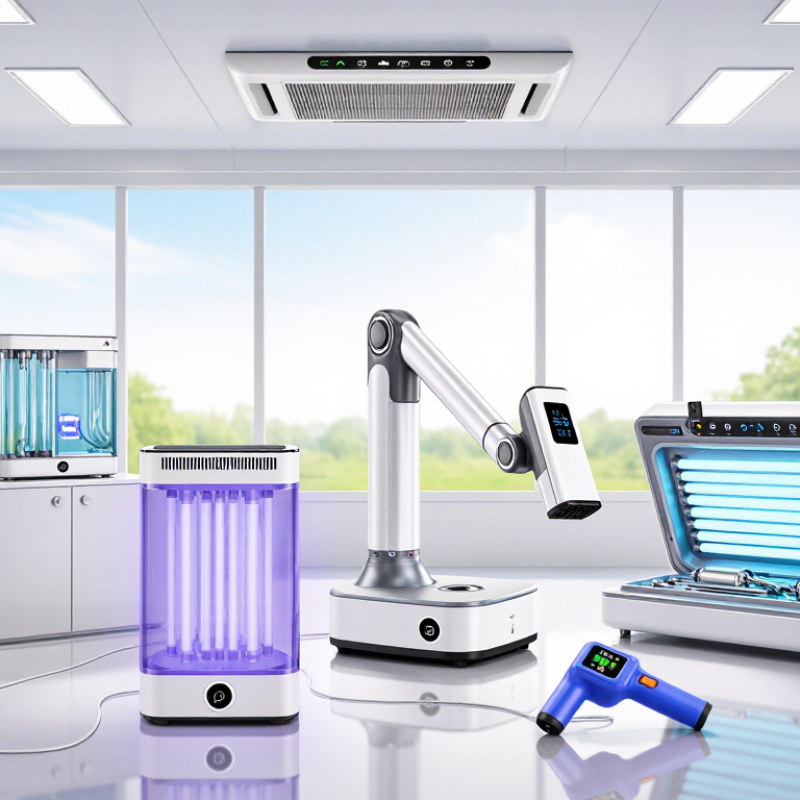
2026 Top Smart UVC Product Types for Global Buyers
Smart UVC systems use ultraviolet radiation mainly between 200 and 280 nanometers. This is the recognized germicidal UVC range. CIE 155:2003 identifies peak microbial sensitivity near 265 nanometers, where DNA and RNA absorb energy strongly. However, wavelength alone does not prove performance. Dose, exposure time, airflow, surface distance, and humidity also matter. ASHRAE Handbook—HVAC Applications reports that these conditions can significantly change ultraviolet germicidal effectiveness.
IEC 62471 requires photobiological safety assessment for lamps and lamp systems. Buyers should request measured irradiance, exposure limits, shielding details, and test conditions. Smart products may include occupancy sensors, door interlocks, runtime counters, and UVC dose monitoring. These features reduce accidental exposure risks, but software can fail. Hardware protection remains essential. CIE 239:2020 also emphasizes controlled installation and verification for UV-C applications. A “smart” label is not a safety certificate.
Tips: Check the exact wavelength, optical output, and tested dose. Ask whether measurements were taken at the target surface. Confirm IEC 62471 evaluation under realistic operating conditions. Avoid relying only on app displays. Human oversight is still necessary. One practical weakness deserves attention: many product claims simplify complex laboratory data. Global buyers should compare independent reports, not marketing percentages.
Smart UVC products use ultraviolet-C radiation within the 200–280 nm germicidal spectrum. The chart compares representative emission wavelengths used in major product categories; wavelength is not a market-share ranking.
Low-pressure mercury lamps commonly emit at 253.7 nm, UVC LED systems are commonly designed around 255–280 nm, and KrCl excimer systems emit near 222 nm. IEC 62471 evaluates photobiological safety and exposure risk; every finished product requires assessment based on its actual spectrum, optical design, irradiance, and exposure time.
In 2026, global buyers are comparing 254 nm mercury lamps with 255–280 nm UVC LED systems. Low-pressure mercury lamps emit near 253.7 nm, close to DNA absorption peaks. The U.S. Environmental Protection Agency’s UV Disinfection Guidance Manual commonly references a 40 mJ/cm² validation benchmark for resistant protozoa.
Dose matters more than lamp wattage.
Mercury systems usually provide stronger UVC output per electrical watt. Industry engineering ranges often place their UVC efficiency near 25–35%. However, they require warm-up time, contain fragile glass tubes, and need scheduled replacement.
UVC LEDs offer instant switching, compact designs, and easier pulsed control. Their practical efficiency often remains around 2–5% at 255–280 nm, according to U.S. Department of Energy solid-state lighting research updates. That gap affects heat management and operating cost.
Smart buyers should request measured irradiance, delivered dose, lifetime data, and sensor calibration records. A 275 nm LED may not deliver the same dose profile as a 254 nm lamp. Reactor geometry changes the result. Dust changes it too. The International Ultraviolet Association stresses validation under real operating conditions, not only laboratory claims. I would avoid choosing LEDs simply because they look newer. Their mercury-free design is valuable, but thermal aging and uneven optical coverage still need attention. Even experienced teams can underestimate those details.
2026 Top Smart UVC Product Types for Global Buyers
Smart UVC products should be classified by target dose, exposure time, and application risk. Air systems usually deliver low-dose, continuous treatment inside ducts or upper-room zones. ASHRAE Handbook—HVAC Applications, 2023, stresses that airflow, humidity, lamp output, and room mixing affect real performance. A larger lamp does not guarantee stronger disinfection. Poor airflow can leave hidden pockets untreated.
Water systems require clearer dose validation. The U.S. EPA Ultraviolet Disinfection Guidance Manual identifies 40 mJ/cm² as a widely used reference point for several drinking-water designs. However, the correct dose depends on organism resistance, water clarity, flow rate, and sensor accuracy. Smart controllers should record UV intensity and operating hours. They should also trigger maintenance alerts before output declines.
Surface UVC products need the highest caution around shadows, distance, and human access. ISO 15858:2016 focuses on safety information for UV-C devices, while measured surface dose must reflect real geometry. A target may require 100 mJ/cm² or more, but no universal number fits every pathogen or material. The category is not perfectly tidy. Buyers should request third-party test reports, calibrated sensors, and photobiological safety evidence. Some vendors still present lamp power as dose, which is an incomplete comparison.
| Product Category | Smart UVC Product Type | Typical Target Dose | Primary Use Case | Typical 254 nm Exposure Method | Smart Control and Monitoring | Key Buyer Evaluation Criteria |
|---|---|---|---|---|---|---|
| Air | In-Duct UVC Air Disinfection Module | Approximately 500–1,500 J/m² (50–150 mJ/cm²), subject to airflow, humidity, and target organism | HVAC supply and return air, commercial buildings, healthcare support areas | Shielded lamps or UV-C LED arrays installed inside ductwork | Airflow sensor, lamp or LED runtime tracking, door interlock, fault alarm, optional dose calculation | Verified UV output at end of service life, pressure drop, airflow residence time, access safety, maintenance interval |
| Air | Upper-Room UVC Air System | Dose is designed for repeated low-level exposure through room air mixing; commonly validated by equivalent air changes rather than a single surface dose | Occupied indoor spaces where continuous air treatment is required | Shielded fixtures direct UVC into the upper-room zone while fans mix lower-room air upward | Occupancy scheduling, irradiance monitoring, fan status, UV safety sensor, remote status reporting | Optical shielding, installation height, room mixing, allowable occupied-zone irradiance, independent photometric testing |
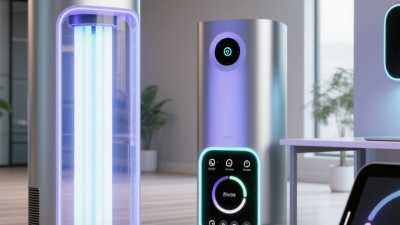
| Air | Portable Enclosed UVC Air Cleaner | Internal chamber dose selected to achieve the specified single-pass microbial reduction; commonly engineered in the 500–2,000 J/m² range | Offices, classrooms, clinics, laboratories, and temporary treatment areas | Fan-driven air passes through a sealed UV chamber, often combined with particulate filtration | PM sensor, fan-speed control, filter-life alert, UVC interlock, power and runtime dashboard | Clean-air delivery rate, single-pass test method, noise, ozone emissions, filter compatibility, electrical safety |
| Air | Occupied-Space Air-Circulation UVC Unit | Application-specific; performance should be stated as equivalent air changes per hour or measured log reduction | Continuous air treatment in occupied rooms without direct UVC exposure | Fully enclosed recirculation chamber with controlled airflow and internal UVC exposure | Occupancy mode, airflow feedback, lamp output compensation, filter and service alerts | Leakage testing, airflow uniformity, biological validation, acoustic performance, replacement-part availability |
| Water | Point-of-Use Drinking-Water UVC Reactor | Typically 400 J/m² (40 mJ/cm²) or higher for demanding microbial targets; required dose depends on water quality and validation standard | Under-sink systems, dispensers, bottle fillers, and final-point treatment | Flow-through chamber using low-pressure mercury lamps or UV-C LEDs | Flow sensor, UV intensity sensor, dose estimation, lamp-life timer, automatic shutoff on low UV output | Validated flow rate, UV transmittance, chamber hydraulics, sensor calibration, potable-water materials, leak protection |
| Water | Whole-House or Commercial Water UVC System | Common design target: 400 J/m² (40 mJ/cm²), with higher doses selected for specific organisms or regulatory requirements | Building water lines, hospitality facilities, food-service facilities, and process water | Pressurized stainless-steel reactor installed downstream of filtration | Flow-proportional dose control, UV sensor, data logging, remote alarm, bypass-valve monitoring | Peak-flow performance, UVT range, pressure loss, reactor certification, lamp replacement, water-contact compliance |
| Water | Open-Channel or Tank UVC Water Treatment Unit | Approximately 300–600 J/m² (30–60 mJ/cm²), determined by hydraulic design, water depth, UVT, and target reduction | Wastewater polishing, reuse water, irrigation water, and industrial process water | Submerged or channel-mounted UV lamps with controlled water depth and flow | Automatic sleeve cleaning, UV intensity sensor, level and flow monitoring, remote maintenance alerts | Validated hydraulic profile, fouling control, transmittance measurement, cleaning system, corrosion resistance |
| Water | Recirculating Spa, Pool, or Aquaculture UVC Unit | Often engineered around 300–600 J/m² (30–60 mJ/cm²), while chemical treatment or filtration may remain necessary | Swimming pools, spas, ornamental water, and aquaculture recirculation loops | Continuous flow-through reactor installed in the circulation loop | Flow sensing, UV output monitoring, temperature monitoring, runtime tracking, service notifications | Correct sizing at maximum flow, chlorine or chemical compatibility, biofouling control, enclosure rating |
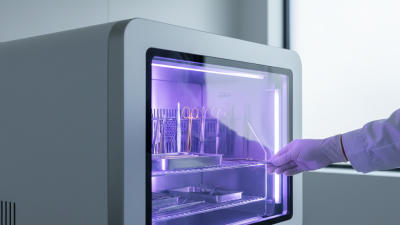
| Surface | Enclosed UVC Cabinet or Drawer | Common target: 400–1,000 J/m² (40–100 mJ/cm²), depending on surface geometry and organism | Small tools, utensils, personal items, laboratory accessories, and reusable equipment | Fixed lamps or LED arrays inside a reflective, interlocked chamber | Cycle timer, door interlock, dose sensor, item-presence detection, cycle-completion record | Shadowing control, minimum irradiance, reflective-surface durability, chamber cleaning, user safety |
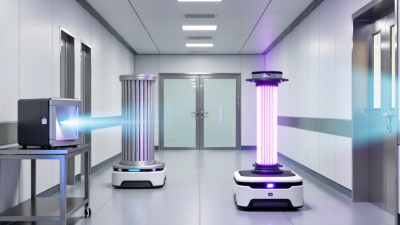
| Surface | Automated UVC Disinfection Robot | Approximately 500–1,000 J/m² (50–100 mJ/cm²) at defined locations; dose decreases rapidly with distance | Unoccupied rooms, healthcare spaces, laboratories, schools, and transport interiors | Mobile UVC tower or array follows a mapped route and pauses at validated positions | Mapping, obstacle detection, remote start, real-time irradiance estimation, motion shutdown, cycle report | Validated room coverage, shadow management, navigation reliability, emergency stop, access control, safety signage |
| Surface | Fixed-Room UVC Disinfection Fixture | Approximately 400–1,000 J/m² (40–100 mJ/cm²) on directly exposed surfaces during an unoccupied cycle | Periodic treatment of rooms, equipment bays, storage areas, and service compartments | Ceiling-, wall-, or mobile-mounted direct-exposure UVC lamps or LED arrays | Occupancy sensor, access-door interlock, programmable delay, irradiance sensor, remote cycle logging | Human-exposure prevention, room geometry, lamp placement, validated cycle duration, warning indicators |
| Surface | Handheld UVC Surface Device | Target dose commonly specified at 400–1,000 J/m² (40–100 mJ/cm²), but actual dose depends strongly on distance and movement speed | Small, hard, nonporous surfaces where controlled manual treatment is possible | Manual scanning with a close-range lamp or UV-C LED array | Distance sensor, motion-speed guidance, dose timer, tilt sensor, automatic shutoff, usage log | Human-safety interlocks, minimum distance, dose repeatability, battery performance, surface compatibility |
| Surface | Conveyor or Production-Line UVC Tunnel | Approximately 400–1,500 J/m² (40–150 mJ/cm²), based on line speed, product shape, and validated microbial target | Packaging, food-contact surfaces, containers, and industrial components | Shielded tunnel with controlled conveyor speed and multi-angle lamp or LED placement | Conveyor-speed feedback, dose monitoring, lamp-output compensation, access interlocks, production data export | Validated minimum dose, shadowing, throughput, product temperature, material compatibility, cleanability |
Smart UVC products should be judged by delivered dose, not lamp power alone. Dose equals irradiance multiplied by exposure time.
For example, 1,000 μW/cm² for 30 seconds delivers 30 mJ/cm².
CIE 155:2003 presents this dose-based approach for ultraviolet disinfection assessment. IES RP-44-21 also emphasizes measurement, shielding, and safe system design.
Air-treatment units need stable airflow and verified exposure zones. Surface devices require accurate distance control, because irradiance can fall sharply as distance increases.
A sensor reading of 800 μW/cm² at 20 centimeters may produce only 8 mJ/cm² after 10 seconds.
ASHRAE Handbook—HVAC Applications, 2023, stresses that real-world performance depends on airflow, lamp condition, fouling, and contact time. A high laboratory result may weaken inside a dusty duct.
Tips:
Ask suppliers for irradiance maps, calibrated instrument records, and measured mJ/cm² at the target surface. Check readings at corners, vents, and moving paths. Confirm whether values are measured before or after protective windows age. Use independent testing when possible.
Smart dashboards look convincing, but they may display estimated dose instead of measured dose. That distinction matters. A clean spreadsheet can still mislead.
I would also question any claim using one universal dose for every organism, surface, and humidity level. Real environments are less cooperative.
For global buyers, smart UVC products may include air purifiers, water treatment units, disinfection cabinets, and sensor-controlled fixtures. Their connected features add value, but compliance evidence matters more than app functions. A polished enclosure does not prove safety.
CE marking indicates conformity with applicable European requirements, not one universal laboratory certificate. Buyers should request the EU Declaration of Conformity, technical files, and test reports matching the exact model. RoHS documentation should confirm restricted substances in electronic components, cables, solder, and plastic parts. Supplier statements alone may be incomplete.
UL evaluation can provide valuable evidence for electrical and fire safety, especially for products entering North American markets. However, the applicable standard and certification scope must match the product category.
IEC 62368-1 uses a hazard-based approach for audio, video, information, and communication technology equipment. It examines risks such as electric shock, fire, excessive temperature, and accessible energy.
Check the report number.
Do not trust a logo alone.
UVC exposure also requires careful engineering. Door interlocks, motion sensors, warning labels, shielding, and fault protection should work during realistic failure tests. A product can pass a basic electrical review yet still create unsafe exposure if its sensor logic is weak. This is where buyers should remain skeptical. Compliance files may be current, but components can change without clear notice. Compare the certificate, model number, factory address, test date, and production sample before placing large orders.
This website uses cookies to ensure you get the best experience on our website. Learn More
ACCEPT