


2026 Top UV Light Decontamination Types for Global Buyers
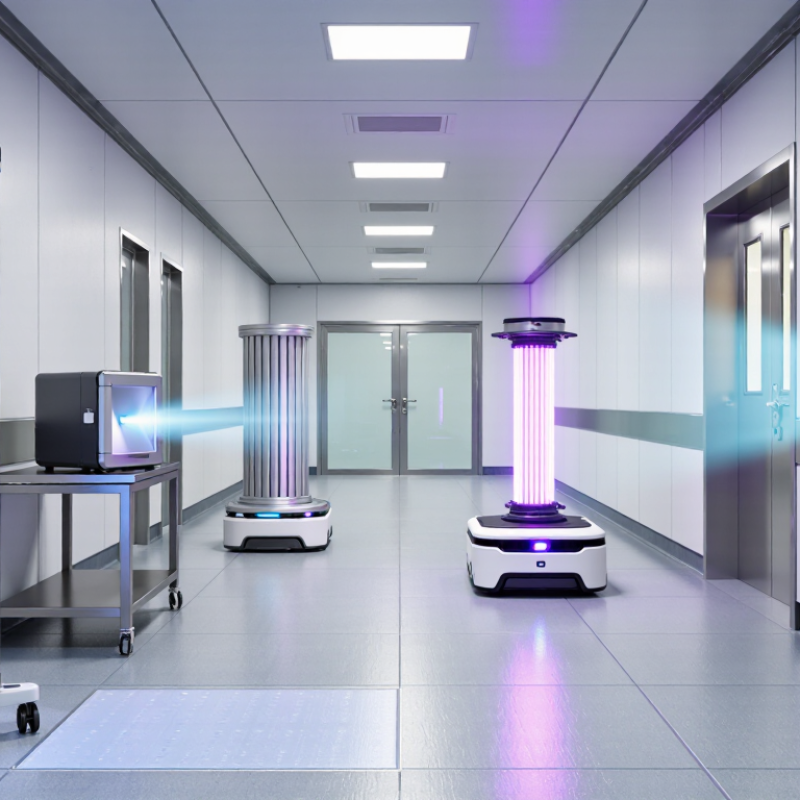
Global buyers entering the 2026 UV equipment market face a practical question: which technology fits the room, workflow, and risk profile? UV light decontamination now includes low-pressure mercury lamps, UV-C LEDs, pulsed-xenon systems, excimer sources, and autonomous mobile units. Each type behaves differently.
A hospital corridor needs different controls from a food-processing line. A compact LED may suit point-of-use treatment, while a high-output mercury system can cover larger enclosed spaces. Pulsed xenon equipment may support rapid room cycles, but surface shadowing remains a serious limitation. Excimer technology is attracting attention because 222-nanometre designs may support occupied-space applications under strict exposure controls. However, “newer” does not automatically mean safer or better.
Dr. David J. Brenner, a leading researcher in far-UVC science, has stated, “Far-UVC light has the potential to be a safe and effective tool against airborne microbial diseases.” That potential still requires evidence, careful installation, and independent testing. Buyers should examine verified dose delivery, irradiance mapping, sensor accuracy, lamp aging, maintenance access, and compatibility with local safety requirements. Ask for test reports, not impressive photographs.
No single type wins every site.
The difficult part is often overlooked. Dust, distance, humidity, and shadows can reduce performance. Operators may also underestimate cleaning and calibration needs. This guide compares the leading 2026 UV light decontamination types for global buyers, while recognizing an uncomfortable truth: product specifications alone cannot prove real-world effectiveness. Reliable purchasing decisions must connect laboratory data with the actual room, people, surfaces, and operating habits.
UV Light Decontamination: Definition, Purpose, and Basic Principles
UV Light Decontamination: Definition, Purpose, and Basic Principles
UV light decontamination uses ultraviolet energy to reduce viable microorganisms on exposed surfaces, air, and water. UV-C, commonly between 200 and 280 nanometres, is the main germicidal range. It disrupts microbial DNA or RNA, preventing replication. It does not usually remove dust, proteins, or chemical residues. Clean surfaces still matter.
The purpose is risk reduction, not instant sterility. Performance depends on dose, exposure time, distance, lamp output, and surface geometry. Shadows can protect microorganisms. High humidity may also reduce airborne treatment efficiency. CDC environmental infection guidance describes ultraviolet germicidal irradiation as a supplementary control, especially for airborne transmission. That distinction is important for buyers comparing room, duct, water, and surface systems.
A 2024 MarketsandMarkets analysis projects continued global growth in UV disinfection equipment, driven by healthcare, water treatment, and public facilities. Market growth does not prove equal field performance. It may even encourage rushed purchasing. Buyers should request irradiance maps, validated dose data, sensor accuracy, maintenance records, and independent test methods. ISO and ASTM-based testing can improve comparability, but test conditions may not match a crowded room or uneven equipment. Human exposure controls remain essential, because germicidal UV-C can injure eyes and skin. Real-world verification is often the missing step.
| UV Decontamination Type | Typical Wavelength | Basic Principle | Common Applications | Main Advantages | Key Limitations | Buyer Considerations |
|---|---|---|---|---|---|---|
| Low-Pressure Mercury UVC | Approximately 253.7 nm | UVC photons damage microbial DNA or RNA, preventing replication and reducing infectivity. | Drinking-water treatment, wastewater treatment, air-handling units, room and surface systems. | High electrical efficiency, well-established performance data, and suitable for continuous-flow systems. | Direct exposure can injure skin and eyes. Output decreases as lamps age, and mercury-containing lamps require controlled disposal. | Verify delivered UV dose, lamp-life rating, quartz-sleeve maintenance, interlocks, and compliance with local hazardous-waste rules. |
| Medium-Pressure Mercury UVC | Broad output, commonly about 200–400 nm | A high-intensity, broad-spectrum UV output inactivates microorganisms through nucleic-acid damage and related photochemical effects. | High-flow municipal water treatment, industrial process water, and applications requiring compact high power. | High power density, compact reactor designs, and broad spectral output. | Usually consumes more energy than low-pressure systems and can generate more heat. Lamp replacement and shielding are essential. | Compare energy use, hydraulic capacity, lamp cooling, UV-dose validation, and maintenance access. |
| UV-C LED | Typically 255–280 nm; many systems use approximately 265–280 nm | Semiconductor LEDs emit germicidal ultraviolet radiation that disrupts microbial genetic material. | Point-of-use water treatment, small air systems, equipment chambers, sensors, and compact surface devices. | Instant start, mercury-free construction, flexible control, compact size, and easier electronic integration. | Lower optical output and lifetime performance can vary with temperature, drive current, and cooling design. | Request irradiance maps, validated dose data, thermal-management information, LED aging data, and electrical safety documentation. |
| Pulsed Xenon UV | Broad pulsed spectrum, often extending through the UV and visible ranges | Short, high-intensity pulses deliver UV-rich radiation that can inactivate microorganisms on exposed surfaces. | Unoccupied-room disinfection, healthcare environments, laboratories, and selected equipment surfaces. | Rapid treatment cycles and broad-spectrum optical output. | Performance depends strongly on distance, shadows, surface reflectivity, pulse energy, and repeated positioning. It is not a substitute for cleaning visible soil. | Check cycle validation, sensor and interlock systems, room-size limits, shadow-management procedures, and operator controls. |
| Far-UVC Excimer | Commonly around 222 nm | Short-wavelength UV-C is designed to inactivate airborne and surface microorganisms while limiting penetration into the outer layers of skin and eyes when properly engineered. | Potential occupied-space air and surface applications, subject to applicable safety requirements and exposure limits. | Potential for continuous operation in occupied environments under controlled exposure conditions. | Safety depends on spectral purity, filtered output, exposure limits, installation height, and regulatory acceptance. Long-term human-exposure evidence and local rules must be considered. | Require independent photobiological safety testing, ozone assessment, exposure monitoring, maintenance controls, and jurisdiction-specific approval. |
| UV-A Photocatalytic Systems | Typically 315–400 nm, often near 365 nm | UV-A activates a photocatalyst, commonly titanium dioxide, to produce reactive species that can help break down selected organic contaminants and support microbial reduction. | Air treatment, odor and volatile-organic-compound reduction, and specialized surface or water-treatment systems. | Can support chemical decomposition and odor control rather than relying only on direct UVC exposure. | Usually slower for microbial inactivation than germicidal UVC. Effectiveness depends on catalyst condition, airflow, humidity, contaminant concentration, and contact time. | Ask for by-product testing, catalyst-life data, airflow or hydraulic validation, and clear separation between disinfection and chemical-removal claims. |
| UV Treatment in Recirculating Water Reactors | Usually UVC, commonly near 254 nm or UVC LED wavelengths | Water passes through a shielded reactor where UV dose is determined by irradiance, exposure time, flow rate, and water transmittance. | Drinking-water polishing, aquaculture, swimming pools, food-process water, and industrial reuse systems. | Non-chemical treatment, no intentional residual disinfectant, and continuous inline operation. | UV does not provide a lasting residual in the distribution system. Turbidity, suspended solids, fouling, and low UV transmittance can reduce performance. | Evaluate validated flow rate, UV transmittance range, dose-monitoring method, automatic cleaning, bypass protection, and downstream microbial controls. |
| UV Air and HVAC Decontamination | Most commonly UVC near 254 nm; other wavelengths may be used with specific safety validation | Airborne microorganisms are exposed to UV radiation as air moves through a duct, air-handling unit, or upper-room zone. | Hospitals, laboratories, commercial buildings, schools, transport facilities, and industrial ventilation systems. | Can continuously treat moving air and may reduce microbial concentration without adding chemicals to the airstream. | Effectiveness depends on airflow, residence time, irradiance, humidity, lamp cleanliness, and air mixing. Direct exposure must be prevented. | Compare equivalent airflow, UV dose, pressure drop, shielding, access switches, ozone emissions, and maintenance requirements. |
| UV Surface and Equipment Chambers | Typically UVC near 254 nm or UVC LED wavelengths | Direct line-of-sight UV exposure damages microorganisms on exposed, relatively clean surfaces. | Small instruments, packaging surfaces, tools, protective equipment, and enclosed consumer or industrial devices. | Dry process, short treatment cycles, and no liquid chemical residue. | Shadows, textured materials, distance, surface contamination, and poor reflectivity can create untreated areas. Materials may degrade after repeated UV exposure. | Look for dose mapping, chamber geometry, reflective-material compatibility, door interlocks, cycle indicators, and material-aging tests. |
Related Posts
-
Top 10 UVC Light Sterilizers for Global Buyers
-
10 Best Hospital UV Light Disinfection Systems?
-
Ultimate Tips for Using UVC Light Sterilizer Effectively?
-
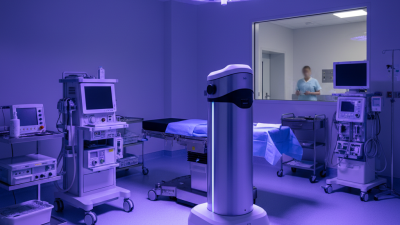
Top 10 UV Disinfection Systems for Hospitals to Ensure Patient Safety?
-
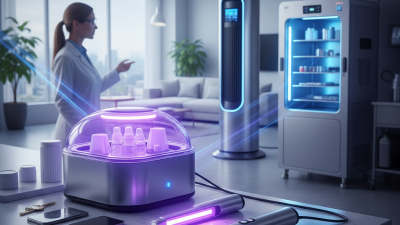
2026 Best UV Light Machines for Home and Professional Use?
-
How Effective is UV Light Decontamination for Global Buyers?