Top 10 UVC Light Sterilizers for Global Buyers

Global demand for uvc light sterilizer equipment is growing as hospitals, laboratories, hotels, and households seek chemical-free disinfection options. MarketsandMarkets estimates that the global UV disinfection equipment market will expand from approximately USD 5.6 billion in 2023 to USD 9.1 billion by 2028. This growth reflects strong interest, but market size does not prove product performance.

Technical evidence requires closer attention. The International Ultraviolet Association explains that effective disinfection depends on UV dose, exposure time, wavelength, and microorganism resistance. A powerful lamp may still fail when dust blocks the surface or shadows hide a contaminated area. That detail is often overlooked.

James R. Bolton, a respected photochemistry researcher and former International Ultraviolet Association president, has described UV disinfection as “a physical process, not a chemical process.” The statement is simple. The purchasing implications are not.

This guide compares ten uvc light sterilizer products for global buyers. It considers irradiance, verified wavelength output, chamber design, safety interlocks, testing evidence, maintenance needs, and international usability. Reports from the U.S. Food and Drug Administration and the U.S. Centers for Disease Control and Prevention also stress that UV-C devices require controlled exposure and cannot replace routine cleaning.

Some product claims remain difficult to compare. Independent laboratory data may be incomplete. Certification labels can also create false confidence. Buyers should examine test conditions, not only marketing numbers. A device that works well inside a reflective cabinet may perform poorly across an open room. That difference matters.

Top 10 UVC Light Sterilizers for Global Buyers

What UVC Light Sterilizers Are and How They Work

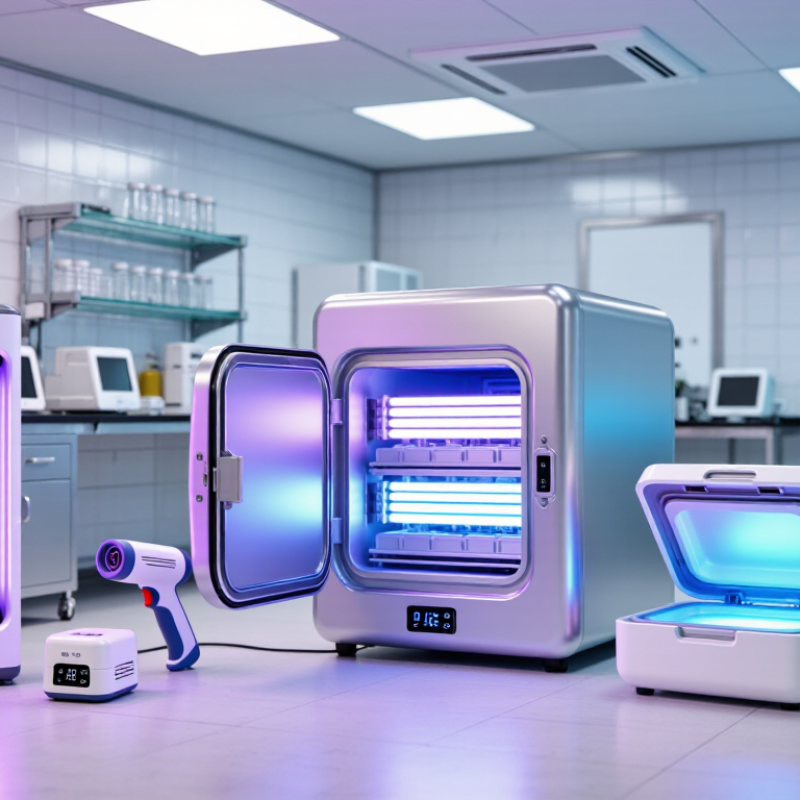
UVC light sterilizers use short-wave ultraviolet energy, usually between 200 and 280 nanometers. Their main target is microbial DNA or RNA. UVC disrupts genetic material and prevents bacteria, viruses, and fungi from reproducing. The Commission Internationale de l’Éclairage identifies approximately 265 nanometers as the strongest germicidal range. Many commercial devices operate near 254 nanometers, using low-pressure mercury lamps.

Performance depends on dose, not lamp power alone. Dose equals irradiance multiplied by exposure time. Distance, surface angle, dust, and shadows can reduce delivery. A small chamber may disinfect a phone quickly, while a textured tool needs longer exposure. ASHRAE’s 2023 Handbook describes ultraviolet germicidal irradiation as a useful air-cleaning supplement, not a replacement for ventilation or filtration. The U.S. FDA also warns that direct UVC exposure can injure eyes and skin. Enclosed designs, interlocks, and verified shielding matter.

Sterilizer can also sound too absolute; real results depend on complete exposure and validated conditions. Independent testing should report wavelength, irradiance, exposure time, and the tested organism. IES RP-44 guidance stresses measurement and maintenance because lamp output declines with age. That detail is easy to overlook. Buyers comparing global products should examine test methods, electrical certifications, ozone claims, and regional safety requirements. A polished housing proves little. A traceable test report proves more.

Key Performance Standards for Comparing UVC Sterilizers

When comparing the top 10 UVC light sterilizers, global buyers should examine measurable performance, not attractive claims. Start with wavelength accuracy. A device should state its UVC range clearly, while independent testing can confirm whether the output matches the specification. Irradiance matters too. Dose equals irradiance multiplied by exposure time, so a bright lamp is not automatically effective.

Look for test data covering real surfaces, shadows, distance, and exposure duration. Smooth metal may receive strong UVC, while hinges, fabric, and recessed areas may receive very little. Ask whether results come from laboratory testing or practical use. Standards for electrical safety, electromagnetic compatibility, enclosure strength, and target-market certification also deserve attention. These requirements differ across regions. Documentation should identify the test method, equipment, and responsible laboratory.

Safety cannot be treated as a minor feature. Enclosed units should prevent operation when opened, and exposed-light systems need reliable controls, warning labels, and access restrictions. Check ozone information carefully, especially for products used indoors. Lamps and LEDs also lose output over time, so maintenance intervals and replacement guidance affect long-term performance.

A neat specification sheet can still mislead. One weakness in many comparisons is the lack of independent verification. Buyers should request dated reports, calibration details, and clear instructions. No sterilizer works equally well in every setting. Real performance depends on dose, placement, cleanliness, and user behavior. Some claims may sound precise, yet remain difficult to reproduce.

Top 10 UVC Light Sterilizers for International Buyers

Choosing among the top 10 UVC light sterilizers for international buyers requires more than comparing lamp power. The right choice depends on the target use: air, water, tools, rooms, or enclosed equipment. Buyers should check verified UVC output, exposure time, chamber size, and treatment dose. A bright lamp is not automatically an effective one.

Safety matters everywhere. Look for enclosed designs, door interlocks, motion sensors, timers, and clear warning labels. For international shipping, confirm voltage, plug compatibility, operating frequency, and local certification requirements. Ask for independent test reports, maintenance instructions, and replacement-lamp information. These documents can reveal weak claims. They also make supplier comparisons more reliable.

Practical details often decide the purchase. Stainless-steel chambers are easier to clean, while rough surfaces can create hidden shadows. Dust on a lamp may reduce performance, so cleaning access is important. For water systems, flow rate and lamp aging require regular checks. For portable devices, battery capacity and stable positioning matter. Never expose skin or eyes to active UVC light. Enclosed treatment is safer.

A careful buyer should compare ten models by measured performance, safety design, warranty support, and total ownership cost. Results may differ between laboratories and real workplaces. I would not trust a ranking based only on wattage or attractive packaging. Local conditions, user training, and maintenance can change the outcome. Some selection mistakes are easy to make. Review the evidence twice.

Safety Requirements and Proper Use of UVC Sterilization Devices

When comparing the top 10 UVC light sterilizers for global buyers, safety deserves more attention than advertised power. UVC usually refers to ultraviolet light between 200 and 280 nanometers. Direct exposure can injure eyes and skin within minutes. Never operate an open UVC device near people, pets, or plants.

Choose equipment with a sealed chamber, an automatic shutoff, and a visible operating indicator. A door interlock should stop the lamp immediately when the lid opens. Check the electrical rating, timer accuracy, warning labels, and ventilation requirements before purchase. Ozone-producing lamps need extra caution, especially in small rooms. Protective glasses alone are not reliable protection during careless operation.

Clean surfaces before treatment because dust and grease can block UVC energy. Place items in a single layer, leaving no hidden corners or overlapping objects. UVC cannot disinfect shaded areas effectively. Follow the stated exposure time and keep the lamp at its tested distance. Never guess the dose from brightness; UVC light may look weak but remain hazardous. Inspect the lamp and housing regularly, and replace damaged parts.

Small mistakes matter. A rushed setup can leave one side untreated. I would also question any claim promising complete sterilization without test conditions. Real performance depends on distance, surface texture, lamp age, and exposure time. When instructions seem vague, pause the process and seek qualified technical guidance.

Global Purchasing Factors: Certification, Shipping, and Support

Global buyers should treat certification as evidence, not decoration. IEC 62471 assesses photobiological risks, while IEC 60335-2-109 applies to household and similar UV water-treatment equipment. Product claims still need test data. Ask for wavelength, irradiance, exposure time, and delivered dose in mJ/cm². A device labelled “sterilizer” may only reduce surface microbes. That distinction matters. WHO’s 2022 Global Report on Infection Prevention and Control links stronger hygiene systems with lower healthcare-associated infection risks, but UVC cannot replace cleaning or safe handling.

Shipping requires equal attention. UNCTAD’s Review of Maritime Transport 2023 states that ships carry over 80% of global merchandise trade by volume. Buyers should confirm carton testing, moisture protection, voltage compatibility, and customs documents before payment. Include the HS code, commercial invoice, user manual, and conformity records. For battery-powered units, request transport documents and packaging details. Delays often come from incomplete paperwork, not distance. Support should include remote commissioning, replacement-lamp guidance, fault codes, and response-time commitments. A low price becomes expensive when no one can explain a failed sensor.

Tips: Request a sample inspection before bulk purchase. Check the safety interlock with the lamp operating. Review independent laboratory reports, not only supplier summaries. I would not accept a certificate logo as proof by itself. Some purchasing teams overlook room size and shadow zones. That is an avoidable mistake. Recheck the dosage after installation, because real cabinets rarely match laboratory conditions.

Top 10 UVC Light Sterilizers for Global Buyers - Global Purchasing Factors: Certification, Shipping, and Support
Rank Product Configuration Typical UVC Source Recommended Application Coverage / Capacity Key Safety Features Certification Evidence to Request Power and Plug Considerations Shipping Factors After-Sales Support Requirements
1 Enclosed UVC Cabinet Sterilizer 254 nm low-pressure mercury lamp or 265–280 nm LED module Medical instruments, laboratory tools, salon equipment and small reusable items Approximately 40–80 L internal volume; commonly 15–60 minute cycles depending on validated dose Door interlock Opaque enclosure Timer control Reflective interior IEC 60335-1 where applicable; IEC 62471 photobiological safety assessment; EMC test report; RoHS declaration 100–240 V AC versions are preferable; confirm plug type, frequency and fuse rating before ordering Protective inner packaging, lamp breakage protection, customs HS code and replacement-lamp transport requirements Spare lamps or LED modules, user manual in English, wiring diagram, dose validation report and 12-month parts availability
2 Portable UVC Disinfection Box 254 nm lamp or 275–280 nm UVC LED array Phones, keys, eyewear, tools and other small non-porous objects Approximately 5–15 L; suitable for one small batch per cycle Lid safety switch Automatic shut-off Low-power design IEC 62471 report; applicable electrical safety test; EMC documentation; RoHS or equivalent substance declaration USB-C or low-voltage adapter options simplify international distribution; verify adapter approvals separately Low parcel weight but higher risk of cosmetic damage; use molded inserts and moisture-resistant cartons Replacement adapter, lid-switch warranty, cycle troubleshooting guide and clear cleaning instructions
3 UVC Water Sterilizer with Quartz Sleeve 254 nm low-pressure mercury lamp Point-of-use drinking water, aquaculture and process-water pre-treatment Typical flow range: 2–30 L/min, subject to UV transmittance and validated dose Quartz sleeve Flow monitoring Lamp-status indicator Leak-resistant housing Electrical safety report; IEC 62471 assessment; water-contact material documentation; IP rating evidence where claimed Check 110/120 V and 220/240 V versions; confirm 50/60 Hz compatibility and inlet/outlet fitting standards Quartz sleeves require shock-resistant packaging; replacement lamps may be classified as fragile goods Annual lamp-replacement schedule, sleeve-cleaning procedure, flow-rate chart and water-quality limitations
4 UVC Air Duct Sterilization Module 254 nm low-pressure mercury lamp; optional 222 nm technology requires additional compliance review HVAC ducts, air-handling units and recirculated indoor air Designed around airflow rather than room area; commonly specified from 500 to 5,000 m³/h Interlocked access panel Lamp shielding Service indicator Airflow compatibility IEC 62471; EMC testing; electrical safety documentation; IP rating and HVAC installation evidence when applicable Confirm motor-control compatibility, earthing requirements, voltage, frequency and terminal configuration Crated shipment may be needed for large housings; confirm duct dimensions and destination installation regulations Installation drawings, airflow-dose calculations, commissioning checklist and trained technical contact
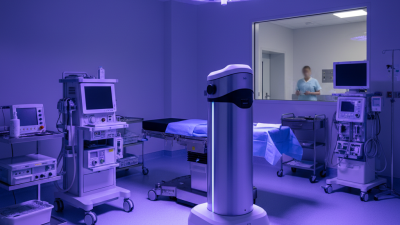
5 Mobile UVC Room Disinfection Tower 254 nm lamp array Unoccupied rooms, clinics, classrooms, offices and hospitality spaces Typical room area: 20–60 m² per cycle, depending on mounting height, surface distance and lamp output Remote control Motion sensor Delay start Emergency stop IEC 62471; electrical safety report; EMC report; wireless compliance documentation if remote connectivity is included Usually 100–240 V AC; verify cable length, plug standard and whether an external adapter is included Use upright protective packaging; wheels, lamp tubes and control panels need impact protection Room-layout guidance, safety signage, sensor testing procedure, software support and replacement lamp availability
6 UVC Conveyor Tunnel 254 nm lamp array or high-output UVC LED system Continuous treatment of packaged goods, trays, components and production-line items Line speeds commonly configured from 1 to 20 m/min; actual performance requires dose testing Light-tight tunnel Guard switches Conveyor interlock Dose monitoring Machinery risk assessment; IEC 62471; EMC documentation; electrical safety report; applicable local machinery conformity file Industrial voltage options may be required; confirm phase, current draw, earthing and control-panel standard Usually palletized or crated; confirm loading equipment, installation access and delivery-site dimensions Factory acceptance test, conveyor calibration, spare belts or lamps, operator training and remote commissioning support
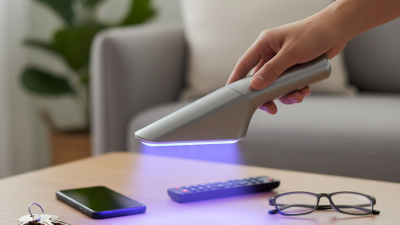
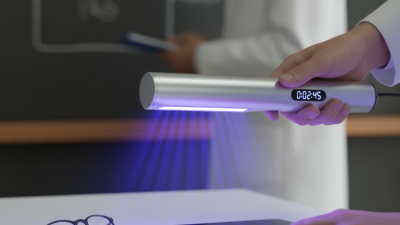
7 UVC Handheld Wand with Safety Timer 254 nm lamp or 265–280 nm LED array Localized treatment of flat, non-porous surfaces in controlled environments Small-area operation; effective dose varies significantly with distance, angle and exposure time Trigger lock Timer UV-blocking shield Requires trained use IEC 62471 photobiological safety report; electrical safety and EMC documentation; battery and charger test records where applicable Rechargeable versions require battery documentation; confirm charger input range and battery transport classification Battery-powered units may require special air-freight handling; provide UN38.3 and relevant battery transport documents Clear exposure-distance chart, eye and skin safety warnings, battery replacement policy and product traceability
8 UVC Shoe and Small-Item Sanitizing Rack 254 nm lamp or 275–280 nm LED modules Shoes, personal protective equipment, sports gear and small household items Usually 2–8 pairs or equivalent item volume per cycle Enclosed rack Door sensor Reflective surfaces Cycle indicator IEC 62471; applicable electrical safety report; EMC documentation; RoHS declaration for global market screening Confirm regional plug, frequency and whether the unit supports 100–240 V input Medium-size carton with internal supports; confirm odor-control claims separately because UVC does not replace cleaning Replacement emitters, cleaning instructions, cycle-time guidance and warranty handling for door sensors
9 UVC Medical Instrument Cabinet with Dose Display 254 nm lamp array with calibrated irradiance sensor Healthcare, dental, laboratory and professional service environments Approximately 50–150 L; intended for organized instrument loading and repeatable cycles Dose display Door interlock Cycle memory Alarm function IEC 62471; electrical safety documentation; EMC report; calibration certificate for the irradiance sensor; local medical-device classification review Confirm input voltage, plug, grounding and whether the control electronics require a specific frequency Large parcel or pallet shipment; request shock indicators and inspection procedure for damaged lamp assemblies Calibration interval, service manual, sensor replacement, audit logs and technical support during installation
10 UVC LED Bottle and Container Sterilizer 265–280 nm UVC LED array Small bottles, food containers and selected non-porous accessories Usually 1–6 containers per cycle; internal geometry strongly affects shadowing and dose uniformity Lid interlock Thermal management Automatic cycle control Mercury-free source IEC 62471; EMC and electrical safety reports; RoHS declaration; food-contact documentation for any surface that directly contacts food Low-voltage adapter or USB-C input may simplify international sales; verify adapter certification and plug compatibility Generally suitable for parcel shipping; protect LED boards from moisture and provide battery documents if applicable LED output-life data, cleaning guidance, replacement-lid policy and documented dose or efficacy test method
Buyer note: Certification marks, efficacy claims, shipping documents and lead times must be verified against the exact model, destination country, electrical configuration and intended use. UVC devices require controlled operation because direct exposure can injure eyes and skin; surface or water treatment performance depends on validated dose, distance, exposure time, shadowing, cleanliness and material properties.