Choosing hospital room disinfection systems is not simply a matter of buying the newest device. Hospitals must match the method to room use, surface types, workflow, and the organisms of concern. The stakes are real.
The World Health Organization’s 2022 Global report on infection prevention and control estimates that 7 in 100 patients in acute-care hospitals in high-income countries acquire at least one healthcare-associated infection. In low- and middle-income countries, the estimate is 15 in 100. These figures describe a broad patient-safety challenge, not the effect of any single disinfection technology. The CDC’s environmental infection-control guidance likewise emphasizes consistent cleaning and disinfection of patient-care surfaces.
This guide explains how to compare hospital room disinfection systems, from manual processes to UV-C and hydrogen peroxide technologies. It considers evidence, room turnaround time, staff training, material compatibility, monitoring, and total operating costs. A system should complement routine cleaning, not replace it. That distinction can be overlooked when product claims sound impressive. Buyers should review independent evidence, manufacturer instructions, and applicable regulatory listings before deciding. There is no universal best choice; a practical fit for one ward may be unsuitable for another.
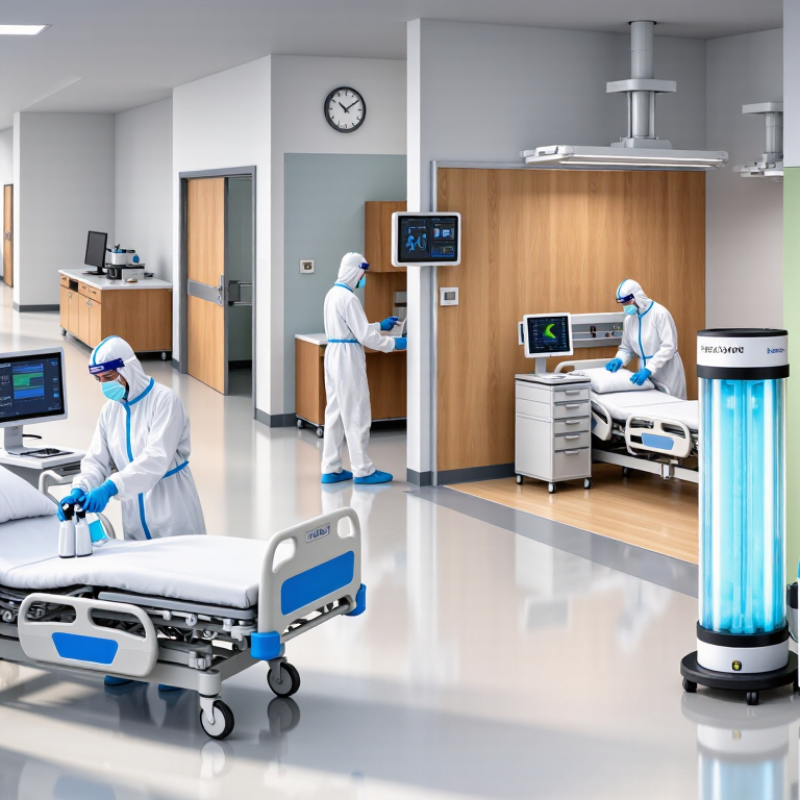
Hospital room disinfection systems use energy or chemical agents to reduce microorganisms on room surfaces after routine cleaning. Common approaches include ultraviolet-C (UV-C) light and systems that disperse hydrogen peroxide as vapor or fine mist. They are usually added to cleaning procedures, not used instead of them. They do not remove soil. That matters.
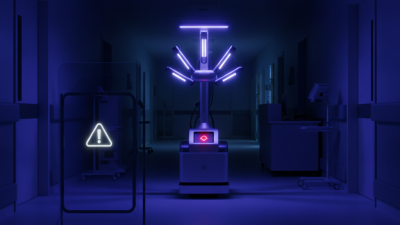
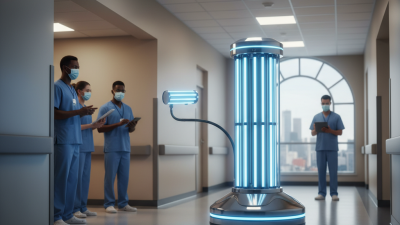
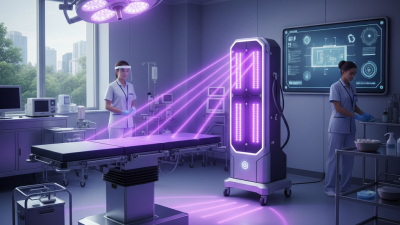
UV-C devices expose surfaces to germicidal light, but distance and shadows affect the dose. A bed frame, equipment, or an open drawer can block exposure. Peroxide-based systems distribute an agent through the room, where it contacts surfaces during a set cycle. Rooms generally need to be unoccupied, and staff must follow the device’s instructions for sealing, exposure, and ventilation. Small details count.
When comparing systems, consider room size, cycle time, surface compatibility, and how easily staff can use the equipment correctly. Ask whether performance data reflects the room conditions and organisms relevant to your facility. Training and routine maintenance also affect results. Real rooms are messy: cables shift, furniture moves, and schedules run late. A system may look reliable on paper, yet still need careful placement and checks in daily use. No device replaces thorough manual cleaning or sound infection-control procedures.
Hospital disinfection needs vary by room, patient, and recent care. A standard inpatient room usually needs attention to bed rails, call buttons, bedside tables, bathroom handles, and shared equipment. These surfaces are touched often, even when they look clean. Focus on high-touch areas.
Intensive care units, operating rooms, dialysis areas, and isolation rooms may carry greater exposure risks. Their cleaning plans should reflect patient vulnerability, procedures performed, and the organisms identified by infection prevention staff. Bathrooms and rooms used for patients with diarrhea deserve particular care. Risk is not uniform.
The pathogen matters, too. Clostridioides difficile spores can resist many routine disinfectants, so surfaces may require a product labeled for sporicidal use. Norovirus also calls for an appropriate, label-verified disinfectant. MRSA and VRE can persist on frequently touched surfaces; respiratory viruses may spread through droplets or contaminated hands. A room’s label alone is not enough.
Choose a disinfection system that fits the room’s surfaces, workflow, and required contact time. Automated ultraviolet or vapor-based methods can support terminal cleaning, but they do not remove soil or replace careful manual cleaning. I would not assume one system solves every risk. Verify product directions and local infection-control protocols, and check that equipment and surfaces are compatible. Small gaps matter.
| Room or Area | Typical Pathogens or Risks | Routine Disinfection Approach | When to Consider an Additional System | Key Selection Criteria |
|---|---|---|---|---|
| General inpatient room | Common healthcare-associated bacteria and viruses, including Staphylococcus aureus and respiratory viruses; contamination is most likely on frequently touched surfaces. | Clean and disinfect high-touch surfaces between patients and according to the facility schedule using an appropriate registered healthcare disinfectant. | Consider an adjunctive terminal-room technology when required by facility policy or risk assessment, especially after discharge of a patient with a transmissible infection. | Confirm surface compatibility, required wet contact time, room setup needs, and documented effectiveness under the intended conditions. |
| Intensive care unit (ICU) | Higher exposure to resistant organisms such as MRSA, VRE, and certain gram-negative bacteria; shared equipment and frequent contact increase transmission opportunities. | Use consistent cleaning and disinfection of patient-zone surfaces and shared equipment, following product directions and equipment instructions. | Ultraviolet-C or a validated room-decontamination process may be considered as an adjunct after manual cleaning for selected terminal cleans. | Assess room layout, shadowing, equipment positioning, cycle time, staff safety controls, and whether the process has been validated for the target organisms. |
| Room used by a patient with C. difficile | Clostridioides difficile spores can persist on surfaces and are less susceptible to many routine disinfectants. | Use a facility-approved sporicidal disinfectant for the indicated surfaces, observing its labeled concentration and wet contact time. | An adjunctive ultraviolet or vapor-based process may be considered after thorough manual cleaning, if supported by facility policy and safe operating procedures. | Verify sporicidal claims for the specific product or process. Additional technology does not replace physical removal of soil or labeled sporicidal surface treatment. |
| Room used by a patient with norovirus | Norovirus spreads readily through contaminated hands and surfaces and can cause outbreaks in healthcare settings. | Promptly clean and disinfect contaminated surfaces with a product specifically labeled as effective against norovirus, following the required contact time. | Use an additional terminal-disinfection system only when indicated by outbreak procedures, a risk assessment, or facility guidance. | Check organism-specific efficacy, coverage of high-touch surfaces, room-turnover time, and compatibility with furnishings and medical devices. |
| Airborne infection isolation room | Airborne pathogens may include Mycobacterium tuberculosis and measles or varicella-zoster viruses. Risk management depends substantially on air handling and infection-control practices. | Disinfect room surfaces as part of routine and terminal cleaning. Maintain required ventilation and airborne-precaution procedures. | Portable air-cleaning devices may be considered by qualified facilities personnel as a supplement when appropriate; they do not replace required ventilation or isolation controls. | Evaluate air-cleaning performance, placement, airflow, noise, maintenance, and compatibility with room ventilation. Surface disinfection alone does not control airborne transmission. |
| Operating room or procedure room | Bloodborne and wound-associated organisms, including bacteria introduced through contaminated surfaces or equipment. | Follow the facility’s between-case and terminal-cleaning protocols, using products approved for the surfaces and equipment being treated. | Additional room-decontamination technology may be considered for defined situations, but must fit the validated cleaning workflow and room schedule. | Prioritize reliable manual cleaning, device compatibility, validated cycle parameters, staff safety, and adequate time before the next procedure. |
| Emergency department and triage areas | Frequent patient turnover and a broad range of possible pathogens, including respiratory viruses and organisms carried on high-touch surfaces. | Apply risk-based cleaning frequencies and promptly disinfect visibly contaminated surfaces and shared equipment. | Portable or room-based adjuncts may be evaluated for selected areas or terminal cleans where workflow allows. | Consider rapid room turnover, ease of deployment, coverage, staff training, and whether the technology complements—not delays—routine cleaning. |
Selection principle: Choose a system based on the room’s transmission risks, target pathogens, surface materials, workflow, and applicable facility policies. Automated technologies such as ultraviolet-C or vapor-based systems are adjuncts to thorough manual cleaning and disinfection, not substitutes for them. Follow product labels, equipment instructions, ventilation requirements, and occupational-safety procedures.
Hospital room disinfection systems generally include manual chemical cleaning, ultraviolet-C (UV-C) devices, and hydrogen peroxide systems. Manual cleaning with an approved disinfectant remains essential for beds, call buttons, taps, and other frequently touched surfaces. It removes soil and applies the required contact time. The WHO’s 2022 Global Report on Infection Prevention and Control estimates that 7 in 100 patients in high-income countries and 15 in 100 in low- and middle-income countries acquire at least one healthcare-associated infection during their hospital stay. Disinfection supports prevention, but no single device can eliminate that risk.
UV-C devices are often used after staff clean and leave a room. Their light can treat exposed surfaces, but shadows behind equipment or under beds may limit coverage. No device fixes missed spots. Hydrogen peroxide vapor and aerosol systems treat room surfaces when spaces can be sealed and kept unoccupied. They may suit terminal cleaning after discharge, though cycle time, ventilation, material compatibility, and monitoring affect room availability. The CDC’s Guidelines for Environmental Infection Control in Health-Care Facilities describe newer no-touch methods as supplements to, not replacements for, routine cleaning and disinfection. In practice, a hospital should match the system to room turnover, surface types, staff training, and documented cleaning performance; the best choice may still leave trade-offs.
Different systems suit different room-clearance needs. This chart compares the typical emission wavelengths of two UV technologies; wavelength alone does not indicate disinfection effectiveness.
System types and common uses: Manual chemical disinfection is used to clean and disinfect accessible surfaces. Portable UV-C devices are typically used to supplement terminal room cleaning when rooms are unoccupied. Upper-room UV-C systems are designed to disinfect air in appropriately designed, occupied spaces. Hydrogen peroxide vapor or aerosol systems are used for whole-room terminal decontamination, following room preparation and clearance procedures. Always follow product instructions and facility safety protocols.
Compare systems against the organisms and room conditions your infection prevention team needs to address. Published performance data should describe test methods, exposure times, and limitations, not just headline reduction figures. Ask whether results apply to real room layouts, including curtains, bed rails, and equipment that can block exposure. That matters.
Safety depends on how a system is used. Review safeguards, room-clearance procedures, exposure monitoring, and staff training. For chemical or light-based technologies, check what the operating cycle requires before anyone re-enters. Manual cleaning remains essential; automated disinfection should support it, not replace it. A comparison can look tidy on paper. Real rooms rarely are.
Operational fit is easy to underestimate. Record cycle time, setup steps, ventilation needs, maintenance intervals, and what happens when a cycle is interrupted. Consider busy periods: a long process may delay room turnover, while rushed setup can undermine consistent use. Ask staff to walk through a typical room change and identify where the system adds work. Their feedback may reveal awkward details a specification sheet misses. Keep records of training, maintenance, and cycle completion, and review them when workflows or room layouts change.
Selecting a hospital-room disinfection system starts with the room’s infection risks, surfaces, and turnover schedule. CDC’s 2015 National and State Healthcare-Associated Infections Progress Report estimated that about 1 in 31 hospitalized patients had at least one healthcare-associated infection on a given day. That figure makes reliable environmental cleaning important, but it does not mean one device can prevent every infection. Map high-touch points, such as bed rails, call buttons, and bathroom handles, before comparing technologies. Check whether the method works with existing cleaning routines, room materials, and staff capacity.
Evidence can guide the choice, with limits. In the BETR Disinfection trial, adding UV-C to standard terminal cleaning reduced the composite risk of acquiring targeted organisms by 30% for patients entering rooms previously occupied by infected patients (Anderson et al., The Lancet, 2017). That is useful evidence, not a guarantee for every ward. Use any supplemental system only after manual cleaning; shadowed surfaces and leftover soil can undermine treatment. For implementation, define who operates the equipment, when rooms must be empty, and how staff safety is protected. Track completed cycles, cleaning audits, and room turnaround time. A machine’s cycle log alone can look reassuring while missed surfaces remain. Review results with infection-prevention staff, and revise the protocol when actual workflow exposes gaps.
This website uses cookies to ensure you get the best experience on our website. Learn More
ACCEPT