


Top 10 Hospital UV Light Sanitizer Robots in 2026?
Hospitals face a practical challenge: rooms must be disinfected consistently without disrupting patient care. A hospital uv light sanitizer robot can support room-turnover routines by delivering ultraviolet light to exposed surfaces. Its performance depends on placement, exposure time, room layout, and careful operation. Shadows matter. A bed rail behind equipment may receive less direct light than an open bedside table.
This guide reviews ten hospital UV light sanitizer robots to help healthcare teams compare their features and limitations in 2026. The discussion focuses on relevant factors, including navigation, safety controls, cycle documentation, service support, and fit with existing cleaning workflows. Product capabilities can change, so specifications and availability should be confirmed with manufacturers before purchase. Hospital staff should also follow device instructions and established infection-prevention procedures. UV systems are an added disinfection measure, not a substitute for thorough manual cleaning or clinical judgment.
No single robot suits every facility. A compact unit may maneuver more easily in crowded rooms, while a larger system may suit open areas but need more storage space. These trade-offs deserve attention. This list is intended as a starting point, not a guarantee of infection-control outcomes. Compare evidence, training needs, and total operating costs alongside headline features. A careful evaluation can reveal weaknesses that a product brochure may not mention.
How UV-C Disinfection Robots Work in Hospitals
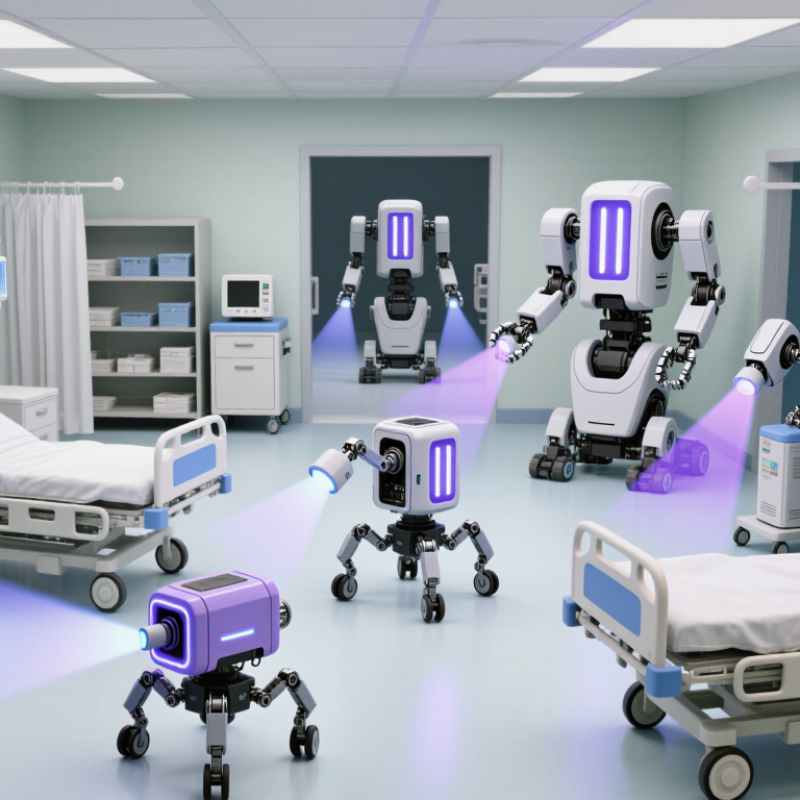
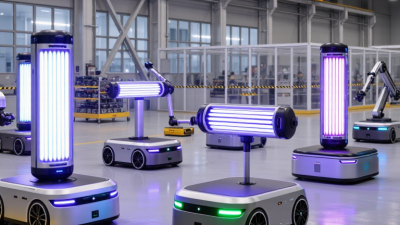
Hospital UV-C disinfection robots use short-wavelength ultraviolet light to reduce microbes on exposed surfaces. They typically map a room, then pause at planned positions to deliver light for set periods. It sounds simple, but dose matters. Distance, exposure time, and surface angle can all affect performance.
Before a cycle, staff usually remove people, clean visible soil, and prepare the room according to facility procedures. UV-C works best with a clear view: bed rails may receive direct light, while shadows behind equipment can limit exposure. Some robots use sensors and warning signals, but these safeguards do not replace trained staff or room-clearance checks. Never treat an automated cycle as proof that every surface was disinfected.
After placement, the unit calculates or follows a route designed to expose key areas, such as mattress edges, tray tables, and bathroom touchpoints. A cycle may take longer when the room is large or objects block the light. Staff should record cycles and follow the device’s validated instructions and hospital policy. Small layout changes can matter more than expected. Results should be reviewed alongside routine cleaning practices, not used as a substitute for them.
Top 10 Hospital UV Light Sanitizer Robots in 2026? — How UV-C Disinfection Robots Work in Hospitals
A practical comparison of common hospital use cases. This is a use-case guide, not a ranking of specific products or manufacturers.
| Rank | Hospital Area | Typical UV-C Disinfection Goal | How a Robot Is Used | Key Operational Consideration | Important Limitation |
|---|---|---|---|---|---|
| 1 | Operating rooms | Supplement terminal cleaning by treating exposed environmental surfaces between cases or after a procedure. | Staff clean the room first, remove people, then position the robot for a programmed UV-C cycle. | Equipment, tables, and lights may need repositioning or treatment from multiple locations. | UV-C is line-of-sight; shadowed surfaces may receive less exposure. |
| 2 | Patient isolation rooms | Provide an additional surface-disinfection step after patient discharge or transfer. | The room is cleaned and cleared before the robot is activated; access is restricted during treatment. | Doorway control and confirmation that the room is unoccupied are essential. | It does not replace routine cleaning or appropriate room ventilation procedures. |
| 3 | Intensive care rooms | Supplement disinfection of frequently touched, exposed surfaces during terminal cleaning. | Use after manual cleaning, with equipment arranged to expose as many surfaces as practical. | Numerous devices and cables can create shadows and complicate robot placement. | Surfaces that are not directly illuminated may not receive an effective dose. |
| 4 | Emergency department treatment rooms | Add an extra disinfection step for rooms that require rapid turnover. | Run the cycle only after the patient has left and manual cleaning is complete. | Cycle duration must fit local room-turnover and staffing workflows. | UV-C treatment time varies with room layout, distance, device, and required exposure. |
| 5 | Patient rooms after discharge | Supplement routine terminal cleaning of exposed room surfaces. | Place the robot in one or more positions based on the room layout and the device instructions. | Staff should account for bed position, furniture, and bathroom layout. | UV-C does not remove soil or organic material and cannot substitute for cleaning. |
| 6 | Procedure and examination rooms | Provide an additional surface-treatment step after procedures and manual cleaning. | Use during room downtime when the room is empty and access can be controlled. | Small rooms may still need deliberate placement to reduce shadowed areas. | It is not a sterilization method for instruments or a replacement for validated reprocessing. |
| 7 | Post-anesthesia care unit bays | Supplement cleaning of exposed surfaces when a bay is vacant for terminal treatment. | Position the unit to treat the bed area and nearby high-touch surfaces. | Open bays require clear boundaries so people do not enter during a cycle. | Nearby curtains and equipment can block UV-C from reaching surfaces. |
| 8 | Urgent care and observation rooms | Add a supplementary treatment step after patient discharge or transfer. | Schedule a cycle after manual room cleaning, subject to local infection-control policy. | Shared workflows and frequent room use require reliable cycle tracking. | Cycle completion does not establish that every surface received the same exposure. |
| 9 | Diagnostic imaging rooms | Supplement cleaning of accessible surfaces around imaging equipment. | Use only when the room and equipment are cleared and the robot can be positioned safely. | Follow equipment-manufacturer instructions and protect UV-sensitive materials as required. | Complex equipment geometry can produce substantial shadowing. |
| 10 | Shared treatment and dialysis areas | Provide an additional surface-disinfection step in designated vacant areas. | Run the robot only after the area is unoccupied and manual cleaning is complete. | Coordinate use with patient schedules, movable equipment, and room access controls. | Open layouts may make it harder to ensure the treatment zone remains clear and unoccupied. |
How UV-C robots work: The robot emits germicidal ultraviolet-C light onto exposed surfaces. Effectiveness depends on factors such as wavelength, delivered dose, distance, exposure time, and line of sight. UV-C can harm eyes and skin, so the area must be unoccupied during operation and safety controls must be followed. Robots supplement—not replace—manual cleaning, disinfection, or instrument sterilization. Follow the device instructions and the facility’s infection-prevention policies.
Related Posts
-
Top 10 UVC Disinfection Robot Suppliers in China?
-
Top UV Robot Manufacturers for Global Buyers
-
What Is the Best UVC Disinfection Robot from China?
-
What Are the Top 10 UV Robot Manufacturers in China?
-
2026 Best UV Light Machines for Effective Disinfection Solutions?
-
10 Essential Tips for Choosing the Right Surgical Step Stool