Top 10 UVC Disinfection Robot Suppliers in China?

Choosing a uvc disinfection robot supplier in China calls for more than comparing prices or polished product photos. Buyers need to examine tested performance, operating safeguards, navigation, maintenance, and evidence behind each claim. Small details matter: a robot’s route through a ward, its UV-C dose records, and how staff verify room clearance. Evidence matters.

The broader market is growing, but figures need context. MarketsandMarkets estimated the global UV disinfection equipment market at about US$5.2 billion in 2023, with a forecast of US$8.1 billion by 2028. That estimate covers more than robots, so it should not be read as a robot-sales figure. In a hospital trial published in The Lancet in 2017, adding UV-C to standard cleaning reduced acquisition of certain pathogens in targeted rooms. Results depend on the setting and protocol. Not every claim travels.

This Top 10 guide compares Chinese suppliers through practical questions: Do they provide independent test reports? Can they explain dose monitoring, obstacle detection, service coverage, and staff training? Are performance claims clear about room size and operating conditions? Product brochures rarely answer everything. A ranking can only be a starting point, not a verdict. Buyers should verify specifications directly and match each system to their facility’s needs.
Top 10 UVC Disinfection Robot Suppliers in China?

What UVC Disinfection Robots Are and How They Work

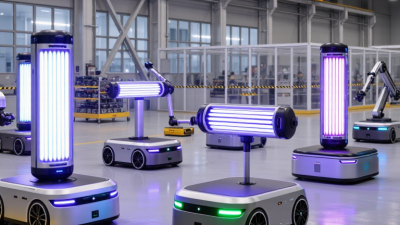
UVC disinfection robots use ultraviolet-C light to reduce microorganisms on exposed surfaces and in the air. UVC can damage microbial genetic material, preventing organisms from replicating. Many systems use lamps near 254 nanometers; some use UVC LEDs at different wavelengths. The robot typically maps a room, navigates around obstacles, and runs timed exposure cycles. That sounds simple. It isn’t. Shadowed areas, distance, surface material, and exposure time all affect the dose reaching a target. A robot cannot clean dirt or reliably disinfect a surface hidden behind a chair.

Safety matters because direct UVC exposure can harm eyes and skin. Robots should operate in unoccupied spaces, with safeguards such as motion sensors, remote controls, or door interlocks. Facilities should follow the manufacturer’s operating instructions and verify performance for their room layout. Results vary. This is a useful addition to routine cleaning, not a substitute for it.

Tips: Before comparing suppliers, ask for wavelength and irradiance data, cycle-time guidance, safety features, and independent test reports. Check whether validation reflects real surfaces and room conditions, not only ideal laboratory tests. Keep a simple room log; it may reveal missed corners or cycles that need adjustment. Some details are easy to overlook. That part deserves review.

Where UVC Disinfection Robots Are Commonly Used

UVC disinfection robots are most often used in hospitals, especially patient rooms, isolation rooms, and operating rooms between cases. They typically run after manual cleaning, when a room is empty. Their lamps deliver ultraviolet-C light to exposed surfaces; shadows behind bed rails, cables, and equipment can limit coverage. Shadows still matter.

The WHO’s 2022 Global report on infection prevention and control estimates a substantial healthcare-associated infection burden. About 7 in 100 acute-care patients in high-income countries acquire an infection. The estimate is 15 in 100 in low- and middle-income countries. These figures describe infection burden, not robot effectiveness. Long-term care facilities and high-turnover clinics may also assess UVC systems for selected rooms, depending on workflow and equipment. Operators should check room occupancy, dose, exposure time, and device records. Clutter complicates coverage. A missed shadow is easy to overlook, so local validation matters more than a polished demonstration.

Where UVC Disinfection Robots Are Commonly Used

This chart shows typical settings where mobile UVC robots are used for supplemental surface disinfection. Equal bars identify application examples; they do not represent market share, deployment volume, or measured adoption rates.

How to Assess UVC Robot Suppliers in China

Assess UVC robot suppliers in China by requesting test evidence for the exact model, lamp, and operating cycle—not a general product brochure. Ask for measured irradiance and delivered dose at floor level, bed rails, and shadowed surfaces. Shortcuts matter. A robot’s advertised cycle time means little if room layout leaves surfaces untreated.

A useful benchmark is the 2017 BETR-D study, published in The Lancet Infectious Diseases. Across nine hospitals, adding UV-C disinfection to standard cleaning was associated with a 30% lower incidence of target-organism acquisition or infection in exposed patients. This was a hospital trial, not a guarantee for every robot or room. Ask suppliers for independent microbial testing, the organisms tested, sample locations, and the full test conditions.

Check safety documentation against IEC 62471, which addresses photobiological hazards, and request records for emergency stops, motion sensors, and lamp shutdown when people enter. Ask to see maintenance logs and lamp replacement intervals, too. Real rooms are messy. A demonstration in an empty room may not reflect daily use, and that is an easy weakness to miss. Compare after-sales response times, operator training, and access to local spare parts before choosing a supplier.

Ten Notable UVC Disinfection Robot Suppliers in China

China’s UVC disinfection robot market includes suppliers with different strengths, from mobile platform design to ultraviolet system integration. A useful comparison begins with the operating environment. A robot intended for a hospital corridor may not suit a crowded clinic, hotel, or warehouse. Check its navigation method, obstacle detection, battery endurance, and ability to cover rooms consistently. Details matter. Ask suppliers for test methods and clear explanations of how exposure is measured, rather than relying on broad performance claims.

Ten notable UVC disinfection robot suppliers in China should be assessed by more than advertised output. Look for documented safety features, such as motion sensors, warning indicators, and automatic lamp shutoff when people enter the treatment area. Ask about maintenance intervals, replacement-part access, operator training, and local technical support. Independent test records can help buyers assess whether stated results apply to their own room size and surfaces. A polished brochure is not proof. Even a capable robot may leave shadowed areas untreated, so staff may need to reposition equipment or prepare spaces carefully. That limitation deserves attention. Compare practical demonstrations, service terms, and verification procedures before choosing a supplier.

What to Compare When Choosing a Chinese Supplier

When comparing Chinese UVC disinfection robot suppliers, ask for measured dose, not just lamp wattage. Request irradiance maps at several heights and distances, including bed rails, floor edges, and shadowed areas.

A 2020 laboratory study in Emerging Microbes & Infections reported complete SARS-CoV-2 inactivation after nine minutes of 254-nm UV-C exposure under its specific test conditions. A robot’s room layout, surface angle, and distance can change results. Details matter.

Compare suppliers using the same test protocol. Check whether the robot records cycle time, lamp output, battery status, and fault alerts, and whether sensors have calibration records. Ask for independent test reports that identify the organism, surface, distance, and delivered dose.

CDC guidance treats automated UV devices as supplements to routine cleaning, not replacements. Also review obstacle handling, emergency stops, access controls, operator training, and local service response times.

A glossy brochure is not proof. I would question any single-cycle claim without room-specific validation. Some suppliers may provide strong hardware but thin documentation; verify both before purchase.