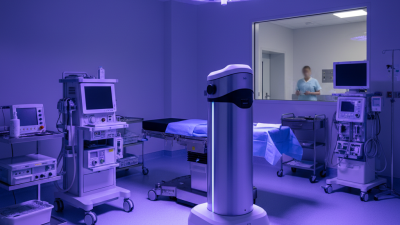
Choosing the 2026 best uv light sterilization operating room solution requires more than comparing lamp intensity or marketing claims. A reliable system must fit real surgical workflows, room geometry, surface materials, and verified infection-control procedures. It should deliver a documented ultraviolet dose, monitor exposure conditions, and provide clear safety controls before staff re-enter the room.
William A. Rutala, PhD, MPH, a widely recognized infection-prevention expert, has emphasized: “No-touch disinfection technologies should be used as an adjunct to, not a replacement for, routine cleaning and disinfection.” That principle remains essential. UV devices cannot remove blood, tissue, dust, or chemical residue from an operating table. They also cannot disinfect shaded surfaces that the light cannot reach. Physics matters here. So does human behavior.
The strongest uv light sterilization operating room programs combine manual cleaning, validated UV-C cycles, staff training, maintenance records, and periodic performance checks. Look for systems with calibrated sensors, access interlocks, cycle documentation, and transparent efficacy testing. A bright lamp is not automatically a dependable solution. Nor is a short cycle always better.
Some hospitals may still overestimate what UV can achieve. That deserves honest reflection. Room turnover pressure can encourage shortcuts, especially when equipment appears simple to operate. The better question is practical: Can this system reduce microbial risk consistently without creating new safety problems? This guide examines leading 2026 solutions through that question, balancing clinical evidence, operational experience, and the limits of current technology.
In operating rooms, ultraviolet light is mainly used to reduce airborne and surface microorganisms after cleaning. UV-C energy can damage microbial DNA, but it does not replace manual disinfection. It also cannot reliably treat shaded areas, fabric folds, equipment gaps, or dust-covered surfaces. The term “sterilization” therefore needs careful use. In many clinical settings, “UV disinfection” is more accurate.
Effective systems require measured exposure, correct placement, and controlled room access. Operating staff should leave the room during active UV-C cycles unless the equipment is specifically designed for safe occupancy. A trained technician should verify dose delivery with sensors or independent testing. Room size, ceiling height, surface reflectivity, and airflow can change performance. Real operating rooms are rarely empty. That matters.
Tips: Clean first. Remove unnecessary equipment. Open drawers and doors when permitted. Position mobile units to reduce shadows. Keep people away during exposure. Record cycle time and verification results. Follow infection-control policies and equipment instructions. Never rely on a timer alone.
In practice, UV systems work best as one layer within a broader environmental hygiene program. They may support terminal cleaning between procedures, especially when high-touch surfaces are difficult to inspect. Yet results can vary between rooms. A promising cycle may still leave untreated zones. Regular audits, maintenance, and staff feedback are essential. Some assumptions will need revision.
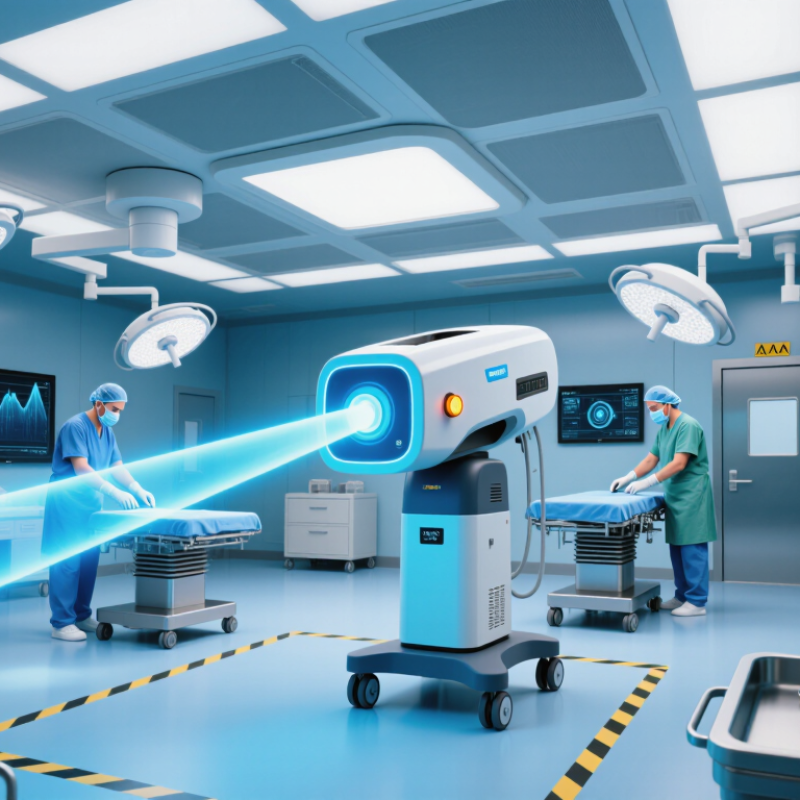
UV-C systems expose empty operating rooms to short-wave ultraviolet energy, commonly near 254 nanometers. The energy damages microbial DNA and prevents pathogens from reproducing. Placement matters. A ceiling unit may directly reach the operating table, walls, and floor. Equipment edges, cables, and drawer handles can remain shaded. The weak point is shadowing.
The Centers for Disease Control and Prevention states that ultraviolet germicidal irradiation should supplement cleaning, not replace it. Staff must remove visible soil before starting a cycle. Sensors, door interlocks, occupancy checks, and dose records support safer operation.
A terminal cycle usually begins after the patient leaves and surfaces are manually disinfected. It cannot run safely around people. The 2017 BETR-D clinical trial, published in The Lancet Infectious Diseases, reported about a 30% reduction in targeted pathogen acquisition when UV-C supplemented standard cleaning in high-risk rooms. Results varied by organism and room conditions. That limitation matters.
WHO’s Global Guidelines for the Prevention of Surgical Site Infection reports surgical-site infection rates near 2–5% in high-income settings and about 11% in low- and middle-income settings. UV-C addresses environmental contamination, not every infection pathway. I would avoid calling every cycle “sterilization.” Validated disinfection is a more accurate claim unless testing proves sterilization under defined conditions.
Reliable programs combine UV-C with meticulous wiping, airflow control, staff training, and periodic dose verification. Some details still need stronger evidence.
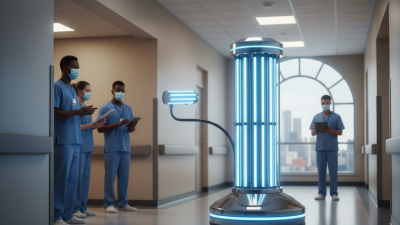
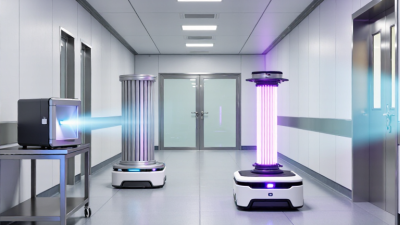
Surgical facilities use several UV light solutions, each serving a different control point. Mobile UV-C units treat exposed surfaces after staff leave the operating room. Their effectiveness depends on distance, exposure time, and line of sight. Dust, equipment, and shadows can reduce the delivered dose. A clean-looking room is not necessarily disinfected.
Upper-room UV systems can support air treatment in suitable occupied areas, but they require careful installation and airflow planning. In-duct UV-C systems treat moving air inside ventilation equipment. They may reduce airborne microorganisms, yet they cannot replace filtration, ventilation, or routine cleaning.
Some facilities also use fixed UV-C fixtures for scheduled, unoccupied room cycles. Door interlocks, warning indicators, access controls, and documented operating procedures are essential.
Reliable selection begins with a room survey. Measure ceiling height, equipment placement, airflow, and cleaning schedules. Request independent performance data, not only marketing claims. Dose mapping can reveal untreated corners. Lamp output also declines with age. Maintenance teams should record operating hours, inspect shields, and verify sensors. One planning mistake is assuming one powerful unit solves every surface problem. It does not. UV-C is a supplemental engineering control, not a substitute for validated surgical cleaning or instrument sterilization. Results should be reviewed with infection prevention specialists, facilities engineers, and clinical staff before routine use.
In 2026, the best UV light sterilization solution begins with safe operating room design. UV-C devices can reduce exposed microorganisms on selected surfaces. They cannot replace cleaning, ventilation, or validated surgical protocols. People matter more. Installation should follow applicable electrical, fire, building, and healthcare requirements. Photobiological safety should be assessed under standards such as IEC 62471, alongside local authority guidance. Qualified engineers must review room dimensions, ceiling height, reflective materials, and airflow patterns before selecting equipment.
Tips: Use fixed interlocks, warning lights, door sensors, and emergency shutoff controls. Place clear signs outside the room. Never rely on a timer alone. Measure, do not guess. During commissioning, a trained technician should verify UV-C intensity with calibrated equipment. Test shadowed areas near equipment wheels, cabinet edges, and surgical lights. Keep an accurate service log, including lamp age, sensor results, cleaning records, and failed safety checks.
Installation errors often appear after the first procedure. A lamp may illuminate the center while leaving hidden surfaces untreated. Staff may also bypass alarms when workflows feel rushed. That risk deserves honest review. Use occupancy controls and restrict activation to unoccupied periods unless a specifically validated system permits otherwise. Replace aging lamps according to measured output, not appearance. Operators need practical training, not only a signature sheet. Local regulations can differ, so the final design should receive documented approval from the facility’s infection-control, safety, and engineering teams.
Maximum 8-hour ultraviolet exposure limits vary significantly by wavelength. The values below are presented as approximate spectral exposure limits for occupational safety planning and are intended to support UV-C system selection, interlock design, access control, and commissioning measurements.
Exposure limits are shown in mJ/cm² for an 8-hour period at selected ultraviolet wavelengths, based on published occupational exposure-limit tables from ACGIH and ICNIRP. Operating-room installations should also use wavelength-specific radiometers, door interlocks, warning indicators, controlled access, documented commissioning, and verification that no personnel are present during direct UV-C exposure.
Selecting a 2026 UV-C sterilization solution starts with the operating room, not the lamp. The WHO Global Report on Infection Prevention and Control estimates that 7 in 100 acute-care patients in high-income countries acquire at least one healthcare-associated infection. In lower-income countries, the estimate reaches 15 in 100. UV-C can support a layered infection-control plan, but it cannot replace cleaning, ventilation, or staff discipline.
Ask for measured irradiance, exposure time, coverage maps, and dose records. A stated “99.9% reduction” means little without naming the organism, surface, distance, and testing conditions. CDC guidance describes ultraviolet germicidal irradiation as supplemental control, not a substitute for manual cleaning. Select systems with occupancy sensors, door interlocks, remote operation, and fault alerts. The 2023 ASHRAE Handbook also emphasizes airflow, shielding, and maintenance when applying ultraviolet systems.
Maintenance needs a written schedule. Clean lamp sleeves and reflectors, verify sensor operation, and record output at defined intervals. Dust can create shadows around bed rails, wheels, and equipment bases. A glowing lamp may still deliver an inadequate dose. That detail is easy to miss. Replace aging components according to verified output, not appearance alone. Review dose logs after room renovations or equipment changes. The weak point may be the workflow, not the technology. Teams should test real room layouts, document failures, and revise procedures when evidence exposes an uncomfortable gap.
| Evaluation Dimension | Recommended 2026 Specification or Practice | Relevant Technical Data | Operating Room Selection Criteria | Maintenance and Verification Requirements | Priority |
|---|---|---|---|---|---|
| UV wavelength | Use a validated germicidal UV-C system designed for environmental surface or air treatment. | UV-C is generally defined as approximately 200–280 nm. Conventional low-pressure mercury sources commonly emit near 253.7 nm. | Request measured irradiance and delivered-dose data at the actual treatment distance, not only the nominal lamp wavelength. | Confirm wavelength output during commissioning and after lamp or module replacement. Keep optical surfaces clean. | Essential |
| Technology type | For unoccupied operating-room terminal treatment, consider mobile or ceiling-mounted UV-C systems with validated room coverage. | Mobile units can be repositioned; fixed systems can support repeatable treatment zones. Both are affected by distance, shadowing, room geometry, and surface reflectivity. | Choose a system that can document treatment time, location, interlocks, and completion status. | Inspect wheels, mounting hardware, cables, controls, sensors, and protective housings according to the service schedule. | High |
| Far-UVC option | Evaluate filtered 222 nm systems only when safety, exposure limits, filtration, and local regulatory requirements have been independently reviewed. | Far-UVC at approximately 222 nm is being studied for occupied-space applications, but safety depends on source design, spectral filtering, exposure, and installation conditions. | Do not assume that every 222 nm product is safe for continuous occupancy. Require independent photobiological safety documentation. | Verify filter integrity, spectral output, exposure monitoring, and preventive-maintenance records. | Conditional |
| Primary application | Use UV as a supplementary environmental disinfection measure after routine cleaning and removal of visible soil. | UV-C can reduce microorganisms exposed to sufficient irradiance and dose, but it does not reliably disinfect shaded, blocked, or soiled surfaces. | Define whether the system is intended for surfaces, room air, equipment exteriors, or a combination of applications. | Review treatment logs and investigate missed zones, blocked line of sight, or changes in room layout. | Essential |
| Dose and exposure time | Select by validated delivered dose for the target organisms and surfaces rather than by lamp power alone. | Required dose varies with organism, wavelength, irradiance, distance, humidity, surface condition, and UV susceptibility. There is no universal room-treatment time. | Obtain a room-specific dose map or validated treatment protocol. Use a conservative cycle time that covers the least-exposed target area. | Measure irradiance with a calibrated UV-C radiometer or use validated dose indicators at defined intervals. | Essential |
| Room coverage | Plan multiple positions for mobile units or use a fixed system designed for the room’s dimensions and equipment layout. | UV intensity decreases as distance increases, and shadows can create untreated areas. A single central position may not cover all surfaces. | Map the operating room, anesthesia area, surgical table, door zones, corners, high-touch surfaces, and equipment recesses. | Repeat validation after major furniture, equipment, wall, ceiling, or ventilation changes. | Essential |
| Safety interlocks | Use door sensors, motion detection, emergency stop controls, audible or visual warnings, and restricted access during UV-C cycles. | Direct exposure to germicidal UV-C can injure eyes and skin. Conventional germicidal UV-C systems should not operate in occupied areas unless specifically designed and validated for that use. | Require automatic shutdown or prevention of operation when personnel enter the treatment area. | Test interlocks, emergency stops, warning indicators, and access-control procedures at commissioning and on a documented schedule. | Essential |
| Material compatibility | Assess the effect of repeated UV exposure on plastics, elastomers, coatings, fabrics, labels, and electrical insulation. | Repeated UV-C exposure may cause discoloration, embrittlement, cracking, or degradation in susceptible materials. | Obtain compatibility information for critical equipment and avoid exposing heat-sensitive or UV-sensitive items unnecessarily. | Inspect exposed materials for cracking, fading, brittleness, or loss of flexibility during scheduled room and equipment checks. | High |
| Lamp or LED service life | Base replacement on measured output and manufacturer-rated useful life, not only on whether the lamp still illuminates. | UV output can decline before visible failure. Low-pressure mercury lamps may also require warm-up time and contain mercury. | Prefer systems with operating-hour counters, output monitoring, fault alarms, and documented replacement intervals. | Record installation date, operating hours, output readings, and replacement date. Dispose of mercury-containing lamps through approved channels. | High |
| Sensor and control accuracy | Use systems that monitor cycle time, room status, lamp output, and fault conditions. | Timer-only control cannot confirm that the intended UV dose was delivered if output has fallen or the unit was moved. | Look for audit-ready records and access controls that prevent unauthorized changes to validated programs. | Calibrate or function-test sensors, timers, radiometers, and data logging components according to documented procedures. | High |
| Air-treatment capability | For occupied or continuously ventilated spaces, evaluate upper-room or in-duct UV systems separately from surface-treatment units. | Air disinfection performance depends on airflow rate, air mixing, UV dose, residence time, shielding, and ventilation-system design. | Require an engineering assessment of airflow and verify that the system does not create unsafe direct exposure. | Inspect lamps, reflectors, filters, airflow components, access panels, and safety switches; document airflow or fan performance where applicable. | Application-specific |
| Cleaning before UV treatment | Complete manual cleaning and remove organic soil before starting the UV cycle. | Soil and biofilm can shield microorganisms from UV exposure and reduce effective disinfection. | Integrate UV into the room’s approved environmental-cleaning procedure rather than treating it as a replacement for cleaning. | Audit cleaning completion, surface preparation, and correct placement of the UV unit before each cycle. | Essential |
| Room status and workflow | Use UV only after the room is vacant, cleaned, prepared, and secured from entry. | Typical terminal cycles require the room to remain unoccupied for the complete programmed duration, including any required safety delay. | Coordinate with surgical scheduling, environmental services, infection prevention, and facilities teams. | Maintain a room-status checklist and retain cycle completion records for quality audits. | Essential |
| Validation method | Combine commissioning tests, irradiance or dose measurements, placement verification, and microbiological or process monitoring when required by policy. | Biological performance depends on the complete system and room configuration, not just the source specification. | Use qualified personnel and a written protocol that identifies target locations, acceptance criteria, instruments, and corrective actions. | Revalidate after source replacement, major repairs, room renovation, equipment relocation, or significant changes in treatment protocol. | Essential |
| Documentation | Maintain a controlled equipment file for each UV system and treatment room. | Useful records include model identification without relying on branding, serial or asset number, wavelength, output, cycle settings, room map, and service history. | Ensure records are accessible to infection prevention, engineering, environmental services, and quality teams. | Document training, inspections, calibration, repairs, lamp replacement, failed cycles, corrective actions, and approval of protocol changes. | High |
| Staff training | Train operators on UV hazards, room preparation, positioning, interlock checks, cycle verification, and emergency procedures. | Incorrect positioning, premature entry, blocked sensors, or unauthorized cycle interruption can reduce effectiveness and increase risk. | Require competency verification before independent operation and refresher training after procedure changes. | Keep attendance and competency records; observe operator practice periodically. | Essential |
| Performance acceptance criteria | Define measurable pass/fail criteria before procurement and installation. | Criteria may include minimum irradiance at mapped points, successful interlock operation, complete cycle logging, and acceptable treatment time. | Do not approve a system solely on rated electrical power, lamp count, or marketing claims. | Trend results over time and open corrective actions when output, coverage, or safety performance falls below the approved limit. | Essential |
| Limitations | Use UV as an additional control measure, not as a substitute for standard cleaning, sterilization of reusable surgical instruments, ventilation, or infection-prevention protocols. | UV cannot reliably reach shaded surfaces and is not appropriate for sterilizing packaged or internally contaminated instruments. | Keep instrument sterilization and high-level disinfection within their validated processing systems. | Review the complete infection-prevention program annually and whenever standards, room use, or equipment changes. | Mandatory note |

This website uses cookies to ensure you get the best experience on our website. Learn More
ACCEPT